Games are Dreams

Okay, bear with me for a bit. I’m going to pull some crazy literary theory shit.

There’s this one famous footnote that Freud added to one of his books, Interpretation of Dreams, years after it was originally published. The gist of the footnote is this: “Hey, everybody, quit assuming that EVERYTHING in dreams is a symbol for something!” Freud thought that dreams had two layers of meaning: the obvious meaning (what was going on in the dream, on the surface) and the ‘latent’ meaning, which is all the stuff that is symbolized on the dream—the meaning under-the-surface that we always think about when someone says ‘Freud’. Freud said we should, basically, quit getting so overly-Freudian on our dreams. He said that we should try to find the ‘dream-work,’ or the combined meaning of the surface and latent elements of the dream. Instead of just saying, “oh, this obviously symbolizes this,” we should say, “when we take all the surface elements into consideration alongside the symbols, what does the whole of this dream actually mean?” I like to think of it in terms of vector math:

So, dreamwork is what you get when you add the rest of the stuff together equally. It’s what the dream is pointing at.

Now, the only people in the universe who still take Freud pretty seriously are literary theorists, and they don’t even take all of him seriously. I have an awesome professor right now who studies comics, and he uses dream-work to understand comics and graphic novels: “When we combine the effects produced by both the surface and the symbolic aspects, what’s the work of this comic? What is it actually pointing at?” It works very well because comics are filled with icons and symbols, and are very fertile grounds for both latent and obvious meaning.

I like to think about games this way, too. When you combine all the stuff that is in a game—the obvious stuff, like the art and the script and the mechanics, and then all the ‘latent’ stuff, like “how does this control scheme influence the way I think about the game?” or “what’s special about the actions the game makes me perform?” or “what does this game assume about its audience?” or “how did the game’s creators establish its tone and mood?” and so on, it helps you to get a more complete and holistic idea of what’s actually going on in the game you’re playing—what’s special about it, and what it’s doing to your brain. And because games are a bit like dreams, the comparison works.

Anyway: have you ever had a moment where you feel particularly conscious of a game’s latent content? The moment I would cite is probably when, while playing Don’t Look Back for the first time, I suddenly became hyperconscious of the way I normally play platformers, and realized what DLB was doing to force me to change that. The nuke moment in Modern Warfare was also pretty effective in this way. It made me suddenly conscious of what kind of agency I expect to have in a FPS, and, in taking that agency away, attempted to express its political message on a kind of subconscious level. What else could have made me want to shoot those renegade Russians so badly? They’d killed me, Anakin-Skywalker-style, once already!

And what about the gamework—have you ever tried to explain the essential essence of a game to a friend, only to get caught up stumbling over words because games are actions, not words, and it’s hard to heal that breach? I feel like the writers who are best able to talk about a game’s work are the ones who write artistically– who try to articulate gamework through the language of metaphor. Tim Rogers’ recent God Hand article does this brilliantly: the final paragraph is so clever that I cannot read it without being ashamed of myself. There are some NGJ pieces out there that I think really make a serious grab at expressing gamework, too—Quinns’ piece on Wurm Online was scary as hell. It made me feel that through this game I could suddenly understand the essential wickedness of man or some shit, even though I hadn’t even played it yet and don’t believe in the essential wickedness of man.

I wish that I’d have been able to articulate this concept back when I’d been studying games for school. It would have solved so many pointless arguments about what the ‘most important part’ of a game is, or ‘what makes game X different form game Y,’ or ‘what is the point of game genre X’—those are all ultimately very rocky ways to think about games. I feel like we should be encouraging each other to look at what games are pointing at, too. Games are like prefab dreams—which is simultaneously awesome and pretty spooky.

Enduring Oblivion

When I was a little kid, every trip to the mall was a potential trip to the arcade.  A five-dollar bill clutched tightly in hand, my brother and I would rush into that flashing cavern, fidgeting in anticipation while twenty quarters clattered into the coin-machine dish.  My favorite games were Tekken, Time Crisis, and The Simpsons, but I rarely chose to play those games.  Instead I would thumb my quarters into skee-ball machines and sport simulators, not because I liked these games, but because these games gave me tickets.  The tickets were key.  You could exchange them for prizes.  Maybe my brother had more fun when we were there, blowing all of his quarters on Time Crisis, but I was the one with the brand new Chinese Finger Trap, and wasn’t that the important thing?

I’m on my third character in The Elder Scrolls IV: Oblivion.  I promised myself that this time I would just have fun, but it was a promise that I couldn’t keep.  As I write these words there is a rubber band strapped to my Xbox controller, forcing my character to swim into a stone wall, endlessly pumping his arms but never going anywhere.  Once an hour a message flashes across the screen: “Your Athletics Skill has increased.”  I’m a hundred hours into the game and I’ve barely played it at all.

When you start out in The Elder Scrolls III: Morrowind you’re a shadow of what you will one day become.  The path from the poor harbor of Seyda Neen to the bustling city of Balmora is grueling and dangerous; you’re so weak that any battle could end in death.  I remember getting lost in the hills with no idea where I was going – just somewhere, anywhere.  I staggered from fight to fight, growing in confidence and skill.  By the end of the game I was slicing up enemies like loaves of bread.  Morrowind made me feel like a hero, but Oblivion makes me feel like a muscular man who never leaves the gym.

Or a metaphor: Oblivion is a creepy man who wants to hold my hand. The game begins with a tutorial in a cave.  “Here’s how to stab things.  Here’s how to shoot a bow.  Isn’t it cool how when you shoot that bucket it reacts realistically?” asks Oblivion, pulling me along, gripping my hand a little too tightly.  “Now,” he says, bending onto a knee.  “Now it’s time to pick what you want to be good at!  How about sneaking?  We had fun practicing sneaking, didn’t we?”  I fall for his ruse, picking a bunch of useful skills as my majors.  Thirty hours in, I die in the same necromancer-infested cave a dozen times over before I quit the game in confused frustration.


It turns out that the enemies in Oblivion, unlike those in Morrowind, level up with you.  If you don’t carefully pick your major skills and plan out each level efficiently, even relatively weak enemies can quickly overwhelm you, and there is nothing that you can do to fix it short of cranking down the game’s difficulty.  If you select major skills that you actually plan to use, you will accumulate meager attribute bonuses and become weaker relative to all of the enemies in the game.  The Oblivion wiki suggests that you should only pick major skills that you don’t intend to use, and then intentionally grind those skills when you actually decide to level.  In short, Oblivion tricks you into making stupid decisions and then it punishes you for them.

My second character is an exercise in misery.  Grinding is boring and my first character just finished these quests.  I sink hours into endlessly, pointlessly tapping the same button on my keyboard, before finally giving up.  The game just isn’t fun anymore, and other games are calling my name.

Two years later, after buying an Xbox360, I find a copy of Oblivion for ten bucks.  I remember that I never finished it and, on a whim, take it home to start a new character.  “This time,” I tell myself, “this time I’ll just have fun.  I won’t worry about my Endurance level, and if worst comes to worst I can always lower the difficulty.”  As I make my way through the tutorial cave for the third time, though, I remember what it was like to fail.  I hate the private humiliation of being beaten by a game.  I’ve never played on easy, and goddamn it I’m not going to start now.  I skewer a final squealing rat and once more it’s time to choose my major skills.  I sigh as I select Speechcraft, Security, Hand-to-Hand, becoming a master of all things useless.

“Well,” I think, “if I’m going to do this again I might as well go all the way.”  I grab an empty notebook and write “1)” in the top left-hand corner to indicate my character’s level.  I fill it with my skill and attribute values, and I mark each marginal upgrade with a tally.  The skills that I actually plan to use – Blade, Heavy Armor, Block, Destruction, etc. – are pitifully underdeveloped, so I decide to just grind those for a little while before I start the actual game.  Twenty-four levels later my book is filled with scrawled pages of numbers, tallies and skill names.  I’ve used my pen nearly as much as my controller.

Maybe playing the game isn’t just about trudging through dungeons and saving the world; maybe it’s also a process of discovering the rules of the system and outsmarting them.  It has become that way for me, but I can’t help feeling like I’ve opened a door that I wasn’t supposed to know about and now I’m tinkering behind the scenes.  Back here the bandits and minotaurs are just sad cardboard cutouts, and I realize that they aren’t my enemies at all.  I’m playing against the developers.  Isn’t this a step away from being a role-playing game?  Scribbling on stat sheets and keeping track of skill levels hardly makes me feel like a battlemage.

The odd thing is that for some reason I’m still actually enjoying myself.  I didn’t think that trailing rats through the Imperial sewers in order to level my Heavy Armor skill was my idea of fun.  There’s something about the grind that keeps me coming back for more, and game designers know it.  World of Warcraft, one of the most successful video games ever made, is practically nothing but grinding.  Almost every JRPG that I’ve played requires me to perform the same repetitive, mindless tasks for hours, just so that I can move into the next area or kill the next boss.  And yet these are the games that I love.

For whatever reason, Oblivion takes the monotony to a whole new level.  Here’s a glimpse of how I’ve spent my 100+ hours of game time.  For a while I just summoned the same skeleton over and over again, killing him each time with a rusty dagger.  That was leveling my Blade skill.  Before that I literally pressed the right bumper over 3000 times, while jumping up and down.  That was leveling my Restoration and Acrobatics skills simultaneously, because hey, I wouldn’t want to waste time.

One of the biggest accusations thrown at gaming is that it’s a waste of time. We’re taught from a young age (at least I was) that time is our most valuable possession, and how you choose to “spend” your time is one of the most important decisions that you can make.  Time is to actions as money is to merchandise: you can convert it into anything.  Gaming is a double evil because it consumes your money and your time.  At least that’s the common assumption.  As a result, games have to prove to us that they’re worth our time by making us feel productive.  I think that this is one of the key reasons for the success and proliferation of grinding.  Every time a skill level flashes on the screen it reminds us that we’re achieving something.  It makes us feel good about what we’re doing.  Dozens of tiny rewards keep us interested, and the big rewards on the horizon keep us going.

Oblivion is a skee-ball machine.  I don’t play it for the experience of playing it.  I play it for the tickets.

Expertise

I have just played my best game of Nethack. My best game of all time. I got to level ten and did almost all of the Gnomish Mines but, while backing up to find the Sobokan, I got trapped between a wolf, a cockatrice, and a giant housecat and was ripped to shreds by them all before I could figure out a way to escape.

Now that I reflect on it, I realize that I had ways to survive. I could have used my pickaxe to dig a hole in the wall and hide inside it, thus limiting the attacks to a single front. Or I could have started zapping all my unidentified wands. Or I could have quaffed that one golden potion I’d found—there’s a chance it might have been a healing potion or a teleport potion. I could have thrown it at an enemy. It might have exploded and killed them (and me?) or paralyzed or confused them. I could have done a number of things. I was so close, really—eminently ‘ascendable’, as NetHack players say. My female dwarven cavewomen could have eventually won the game if I hadn’t screwed up there. A real Nethack expert would have known what to do.

I’m always telling myself that real Nethack experts exist. I honestly believe that there are actual people living in this world—in secrecy, of course, hidden among us under disguise—who have a godly understanding of Nethack and who can actually play it without feeling like a bumbling idiot. I have no evidence for this, but somebody had to write the Nethack Wiki. Those people have to be the geniuses I’m talking about. I mean, they’ve probably actually beaten the game.

You beat the game by ‘ascending’ the character: by travelling to the lowest level of the dungeon and taking the Amulet of Yendor from the High Priest of Moloch. You must then travel to the Astral Plane and offer it to your god, who will grant you immortality, ‘ascending’ you to demigodhood. In order to do this, however, you have to play the game for practically an entire lifetime, learn all the tricks and gambits, master a class and a playstyle, figure out the cost/benefit ratios of practically every risk you could take in the entire game (basically, of every action, since doing almost anything in Nethack could potentially get you killed).

In a way, it reminds me of The Arhkam Horror, a fantastic board-game based on HP Lovecraft’s writings: newbies at Arkham Horror will do everything, and they’ll have a blast. Experienced players will turn almost every risk down—even the ones likely to result in a benefit. They know something us new players don’t. They’re jaded. When they play, it looks like they’re not having any fun, because they’re practically not playing the game. But then they win it, so we all nod sagely and wonder aloud how they got so good.

It also reminds me of people who are really, really good at Civilization IV. They play absurd societies—societies where half the entire culture track gets invented before bronzeworking, societies which leap absurdly from power to power, which manipulate wonders and resources until they’re scarcely similar to real-world civilizations at all. Everything narrows down to the exactness of turns and production-times. The illusion of the game falls apart, and we’re dealing with mister Sid Meyer’s architecture. And it’s fun: that’s what the game is for. You’re supposed to get right on in there with the math and the loopholes and the broken mechanics. It’s satisfying to have that kind of expertise.

There isn’t a way to be an expert at something without surrendering a bit of wonder—without leaving the game-world behind. Not all of it, of course, mind you—just a bit. Enough so that we can peel back the story and get our hands on the numbers that make the game work the way it does. For Pokemon, there’s EV training; for Oblivion, there’s strategic leveling; for other games, like Halo, there’s the ethic behind the whole e-sports scene—three shots to the body, one to the head. Do people really die that way? Of course not, but there has to be some kind of death-math in order for us to master death in Halo, right? For Nethack, it’s the encyclopedic understanding of all game systems: people who can ascend probably know the exact probability that sipping from a fountain will release a water demon, and if they defeat the demon and it grants them a wish, they know they should ask for silver or grey blessed greased +2 dragon scale mail. They know that you can guess the identity of an unknown potion by dropping it in a store to see what the shopkeeper offers them—because they’ve memorized the prices of everything already, and they know what they’re looking for.

I don’t know if this is the way we played games for expertise back in the day, before everything had its own online fan community and its own wiki, complete with number-crunched tables. But it’s kind of the way we play now: collaborating across the internet to rip the clothes off the game and get a look at its inner framework. It’s not bad; it’s just the way expertise works, I think. Being ‘good’ at a game means, most of the time, being an expert at the numbers, not being an expert at ‘enjoying the atmosphere,’ or ‘liking the plot.’ But it’s not like we’re killing the magic: we’re just swapping one kind for another. There’s something incredibly special about the x-ray vision we develop once we begin to look past the outer surface of a game and focus on its inner mathematics. When we learn to do that, we begin to feel powerful and wise. We enter into a kind of secret compact with the developers: we know the neurotically complex work that went into their game—particularly one as complex as Nethack—and we begin to understand it. We understand the game in a new mental language, almost. At any rate, it’s special.

It’s a kind of specialness I rarely feel, though. I’m not the kind of person who gets really really good at games—any games. I think the only one I’ve done this to is Dwarf Fortress, really. I find the process intimidating, and I’m always unwilling to take that mental step out of the gameworld and into the world of the game’s math. Perhaps this is why I run with such an awfully-balanced Dragon Age team, why it took me a whole week to figure out how to beat the Elite Four for the first time, and why the numbers-game focus of raid-level WoW often strikes me as heartless, even though I know that such players regard it as the point of the game. Expertise is the one kind of game-magic I haven’t yet learned to properly appreciate.

Here’s hoping I may, in time. Or I’m never getting anywhere with Nethack.

A bit of argument-killing on my own part, though: this binary is pretty much only the way I see things. People like the Magnasanti guy clearly can see both sides of the coin at once.

Distilled to a purer substance

Have you ever played a game where the minigames or secondary goals were more exciting and compelling than the rest of the entire game?

It doesn’t happen often, but it happens. Through extensive research (asking my friends), I’ve found that this varies in a highly personal way. I had a friend in high school who could never get enough of KOTOR’s Pazaak, which I hated. Whenever I played that minigame I was just dicking around with extra credits, but he had a real strategy and everything! Gosh! And while I absolutely adored the underground mining game in Pokemon Diamond and Pearl, I know a number of people who thought it was incredibly stupid. Kent loves scanning planets in Mass Effect 2; I’ve only done it for maybe twenty minutes, and I find it dull. On the other hand, I found hunting for arrowheads in Psychonauts to be pretty entertaining—I mean, I spent as long a time amassing a grossly enormous fortune in that game as I spent trying to beat the Meat Circus level. And Meat Circus is a crazy.

Why do we do this? I suppose if the satisfaction we get from doing ‘trivial’ and secondary tasks in games is high enough, and if the effort it would take to ‘play the game properly’ is too excessive, we’ll all just sit around and do the trivial stuff instead.  Which sounds a bit cold and mathematical, but there you go. It’s not too much of a mystery why these things happen. I could wax philosophical about the nature of these appealing little secondary games, but they’re not really so mysterious either: they’ve got highly appealing sunk effort/returned reward ratios. And all that jazz.

I think the real question is: why don’t we have games for these trivial things, if we enjoy them so much? Why do they need to be secondary? I mean, narrative, pretty pictures, and man-shooting are clearly no longer the hallowed characteristics of ‘real successful games.’ What if we could take these big-name games and reduce them down to their secondary objectives– what if my friend could have a game of just Pazaak? What if I could take all the games where I’ve ever been distracted by a crazy secondary objective and imagine new, ridiculous games out of them?

Er, I can imagine that. Here they go.

Oblivion becomes: Herbalist Adventure

The most compelling thing about Oblivion is the alchemy.

Yes. I actually believe this. Out of the nearly 100 hours I have spent playing Oblivion in the past year, about 50 of those must have been spent entirely on collecting and combining plants, herbs, fruits, and bits of dead foes into potions. I don’t think I’ve ever gone past the bit in the story where you’re on the snowy mountain where the Blades are at. I did that part only once. All the rest of my characters are soft, pasty fellows with ridiculously good alchemy levels and backpacks full to bursting with every possible kind of plant. I once camped out in the basement of a townhouse, hidden in the shadows while the occupants ate dinner mere inches from my face, waiting for them to leave so I could steal their potatoes and make potions of shield out of them. It was my most epic heist ever, even beyond the Thieves’ guild!

Furthermore, I don’t even use the potions I make: I just carry them around. There’s a character from a famous Jack London short story who hoards insane quantities of food: he basically sleeps on a mattress of biscuits. See, I imagine my Oblivion characters sleeping in glass nests made up of glimmering bottles. The moonlight on the bottles, the strange cordials and elixirs sloshing about with the tiny movements of sleep, and all that. I mean, he’s got to protect them somehow. And it’s picturesque, no?

Herbalist Adventure would be my favorite game of all time. You’d be practically helpless: a weakling lost in a VAST world (let’s make it much bigger than Oblivion; make this a Just Cause-sized world, a huge thing with a million different kinds of plants). Your only skill: the ability to turn flowers into juices. All combat—what little of it there’d actually be—would be enabled by the crazy cocktail of stimulants and steroids you’d chug before every encounter. See a kobold? DRINK THAT POTION OF STRENGTH! DRINK TWELVE! While you’re at it, drink fifteen potions of shield, a potion of accuracy, a potion of Learn to Swordfight, and a Potion That Gives You a Magic Sword. Boom. All ready to go. You’d spend most of the time just skulking around in the bushes, gathering plants, admiring the scenery, researching and cooking up batches of Magical Buff Stew whenever you find a safe place. You’d cook amazing potions—potions that let you fly or run at a million miles per hour or clone yourself or breathe in lava or eat whole trees or tame bears or summon Panzer tanks or talking whales. But mostly it would be beautiful and calming—mostly it would be zen, my friends. It would be gorgeous.

Pokemon Diamond and Pearl become: Magic Dwarf Crystal Garden Tales

I already mentioned that I adore that mining minigame. I also adore Dwarf Fortress. I also adore Minecraft. It all makes sense: I must secretly want to play a game where you adventure in tunnels and grow crystal gardens. Yes. But not like those silly crystal gardens we used to have in the nineties: those are shit. I mean: great caverns of dagger-sharp gems! You’d have to travel around and water them with magic chemicals or whatever and harvest them later. Like Farmville with its guaranteed success, I suppose—but I wouldn’t have any of that schedule-your-life-to-the-game nonsense.

No, I’d have giant cave spiders or sand worms or goblins instead. So: the Pokemon mining game mixed with survival horror. Occasionally, you’d have to craft weapons out of the gems and protect your farms from the invaders with cunning traps and desperate barricades. Multiplayer play could be a Garden Siege Mode, or something: people would try to invade each other’s magic underground wonderlands with some kind of stealth mechanic.

Yes. Just take the whole Pokemon overworld away. I want my gem gardens and I want my secret bases and I want my capture-the-flag games. I want my silly underground time-wastey tomfoolery, please, but more awesome. Can that happen?

Mass Effect and Mass Effect 2 become: My Alien Girlfriend 1 and 2

Okay, I don’t actually want to play this game. But I know people who would! I remember when ME2 came out, all sorts of people were twittering things like “JUST NAILED ALL THESE ALIEN LADIES, WOOO” and I kept thinking things like “Oh my god, Bioware are such a horrible bunch of dicks! They’ve destroyed love! With a video game!”

But it’s not true. They haven’t. The universe continues to be not such a terrible place after all. What it needs, though, is a game where this absurd repressed sexual tension can be truly exploited.

What we need is a game where the whole point is for Man-Shepherd to have sex with alien chicks. Apparently, for maximum success, it must actually be Man-Shepherd in the title role. Not a new IP! Either that, or we need a spinoff of Fable 2 where the whole point is to marry people and then have sex with them. Admit it: you have a lady/man/both in every town in that game, don’t you? I’m under the impression that most people do. Is it too tempting? Is that what the deal is? Anyway, clearly we need a western game specifically for this kind of stuff. The Japanese have already got this shit figured out, guys.

Team Fortress 2 becomes: My Hometown Haberdasher

Hats. Whole game is: receiving hats. You run around in a big room with every other online player and trade hats with each other. You can hang out with guys who have the same hats as you. Or maybe you can do a fashion show while wearing a neat hat, or design your own hat? I don’t know. Just hats.

Hats. Whole game is wearing silly hats.

Alternately, we could be talking about a game I suggested in the comments to my last post: a game where you simply customize characters. Like the Spore Creature Creator, the whole point would be to give you extensive control over the appearance of some in-game avatar. People love messing around with that stuff: I hear stories from friends who take forever to design the perfect Sim, or the perfect Fallout character, and so on. Clearly, we need more games which make this obsession with avatar appearance more central– games which transform it from petty fiddling into an actual game mechanic. I remember that a young friend of my family’s used to be hugely into Gaia online, and from what I saw of it, that game seemed to tap into this customization desire pretty well: the whole point was to get points to buy clothes with, I think. So: games like that, but not totally stupid. A MMO character creator crossed with Spore? Can it happen? I think so.

The mechanics of this imaginary game would revolve around this appearance: you’d have to manipulate it to defeat your enemies. The game I suggested in the post comments was a professional wrestling game where the point was to design a stage presence that would resonate with fans. Best resonance would make your agent cast you as the winner in the staged fight: the better you fine-tuned your look and style to your target demographic, the more often you’d be the winner. Look terrible, and you’d be the heel. You’d spend hours in the editor before every match, fiddling with hair and clothes and catch-phrases and things like that. There could be epic campaign modes, people.

Or could we have something like that with just hats, though? Please?

A Palmful of Guilt

The sun rises around 6 am and that’s when it starts to come full force.  Something about the hazy pink morning light strikes the perfect chord of misery.  The mouse in my hand is a palmful of guilt, guilt, guilt, and my fingers clatter on the keys like the legs of a spider.

It’s Final Fantasy XI and I’m 15.  I’ve turned off the volume and stuffed a towel along the bottom of my door so that my parents don’t know I’m still awake.  The door swings open and the silence of my father’s eyes makes my chest implode.  His shadow circumscribes me and the light from the hallway gives him a sort of halo.  “What are you doing?”  He asks because he wants me to say it.  I remain silent, too ashamed to even form the words.  My father sighs, deeply.  My eyebrows furrow into my head.  I want to melt into the floor.  “Turn the game off.”  On the screen my warrior has lost agro and the monster has killed my party.  Profanity tumbles through the chatbox.  /quit.  “We’ll talk about this when you get home from school.  The bus leaves in half an hour.”  He tries to shut the door behind him but it’s caught on the towel so he just walks away.

It’s World of Warcraft and I’m 18.  My roommate rolls over in bed.  Class in two hours.  I have a headset on and my friends are laughing because we’re winning in 3v3 arena.  “This is my last one,” I type.  “Gotta get ready for Greek class.”  We lose and they want to keep going but I tell them to have a good night and I log out.  I crack my neck and Brenton mutters something in his sleep.  In the shower I bow my head and close my eyes and feel the hot water washing down my body; I try to imagine it as a sort of baptism, a sort of cleansing, and I can still feel the guilt in my chest because I won’t be ready for the test at 8 am, because we lost that last game.  My friends are online and sometimes the booming solitary feeling of gaming overwhelms me even when I can hear them talking in my ears.  I can still hear them talking when I lie down for just a quick nap and I sleep straight through the test.

It’s Digital: A Love Story and I’m 21.  My girlfriend is sleeping on the bed behind me, illuminated in the blue glow of the screen.  Soft chiptunes pop hiss and crackle in my ears, and that purple-pink haze washes through the window, onto the desk, onto my keyboard.  The computer tells me, “I know what it’s like to be lonely, believe me.”  The computer tells me, “I think I’m in love with you.”  I turn around.  Ellie is so quiet when she sleeps, but as though she can feel my gaze, she rustles, she opens her eyes and she looks at me.  “Come to bed,” she says.

“In a minute, I’m almost done.”

Pokemon is a sport game

Earlier this week, while speaking to a group of game-savvy people, I declared rather incoherently that Pokemon was a sports game.

Everyone laughed at me. There were some games-studies people in there, and they all said “Arrr, noooo, me hearty, games can only be sports games if they’re about simulating real-world sports, and if they address the problem of physical embodiment in a digital space, arrr.” Which is pretty much true, yeah, if you think about all the games that get sold as sports games, and also if you are a crusty old academic.

Some of them thought that Pokemon couldn’t be a sports game because it uses RPG mechanics and involves travel across an overworld. I dismissed this, too. “I’m talking about general categories of games, not about actual commercial genres or genres of mechanics,” I said. “Pokemon is about sports in the same way that a game about fox-hunting, cockfighting, or bearbaiting would be about sports.” Actually, I didn’t say that. I was being incoherent and frustrated and didn’t bother to explain myself properly. But I’m writing this now, so I’m editing my stupidity out of the conversation.

Anyway, here is why Pokemon is a sports game. And, at the end, I propose a redefinition of the concept of ‘sports games.’ Wooooo!

It’s about a competition.

Aren’t a lot of games about competition? Well, yeah. Lots are, and many of those have nothing to do with ‘sports.’ Simply including competition doesn’t make a game be ‘about sports.’ But Pokemon, like many conventional sports games, is about structured, rulebound competition. A specific kind of competition. It’s a game which contains a game, and the game is Pokemon Battling. Pokemon Battling exists separately from Pokemon the Nintendo game in the same way that American Football exists separately from Madden 2010. It’s not real, but we know its rules and can imagine it on its own, in television shows, card games, and in video games developed for other platforms.

Within the world of Pokemon, Pokemon Battling is a sport.

It has regulations, leagues, tournaments, rulebooks, referees, ladders, matches, arenas, qualification tournies, and all the other superficial surface-elements we associate with real-world sports. We’d be forced to consider it a sport if it existed on this side of the screen. Much of the story energy that goes into Pokemon is directed at convincing us that we’re taking part in an exciting, new kind of sport.

Mechanics do not a sports game make.

Madden’s mechanics, where you control the actual players on a team and execute actions contained within the game of American Football, are not “the” sports-game mechanics. Plenty of games which are widely accepted as sports games do not contain that kind of control system or play style, and many contain lots of mechanics in addition to these ones. Football Manager games are a great example of sports games which aren’t solely about playing the actual sport itself. And remember Cycling Manager? Steam insists that it’s a sports game, and I think you’d be unable to find people who disagree who aren’t already crazy people. Furthermore, sports games have been including RPG-ish mechanics—where the players get better the more they play, and can upgrade different abilities—for years. These days, as everyone says, there’s a bit of RPG in everything. Anyway, in Pokemon, plenty of things occur that aren’t about actually playing the actual sport, but many of those things are presented as directly effecting sport performance. We travel the overworld to seek new team members and to test ourselves against opponents; even the underground digging game in Diamond and Pearl could produce items useful to the sport. Just because alternate mechanics and goals were there doesn’t mean that the game itself wasn’t ‘about the sport.’

Related news: it has story

Some suggested to me that having a story rules Pokemon out of the ‘sports’ category. Well, true: commercial sports games, as a rule, don’t have scripted stories. But this doesn’t mean that they should or could never have one. I’m being creative here, people. I’m suggesting that the ‘sport-ness’ of sports games is totally independent of story. In fact, I’m challenging someone to make a soccer game where you fight evil soccer mafias and save the world from an evil soccer manager intent on destroying the universe with a mutant soccer player named BeckhamTwo. Do it.

I know that it’s not commercially useful to think of Pokemon as a sports game. I’m suggesting that there are commonalities between Pokemon and traditional sports games which are useful when it comes to analyzing them. I think that there’s something about the structure of traditional sports games– the reward structure, the illusion of progression and growth, of competitive achievement, of being the best and winning vetted awards from imaginary masters and experts– which has much in common with some aspects of Pokemon’s structure. I’m sure that part of the reason why Pokemon and, say Madden are so successful is that they’ve mastered this elusive element. Pokemon isn’t all about collecting them all– it’s also about defeating your friends, defeating the Elite Four three times in a row, being tougher and smarter than everyone else, knowing your strategy, being so good at your game that your game stands for goodness and purity and can actually defeat evil— it’s about Sport, ‘sport’ in the ancient meaning of the word, in the sense that includes grit and stiff jaws and firm handshakes in the arena. “Sport” in the nineteenth-century sense.

At any rate, I think that I could convince those nutty academic types to accept my comparison by merely changing the name of the ‘genre’ slightly. If I’d said “Sport Games” instead of “Sports Games”—‘sport’ in the ancient sense that would include cockfighting and all the rest of those bloodsports I mentioned at the top of this post—I would have been more persuasive. The problem with proposing weird ideas is that the associative power of our language can confuse your audience if you don’t manipulate it properly, particularly if your audience is ultra-semantics-sensitive. Pokemon is “sport.” In the traditional sense, it isn’t “SPORTS,” it isn’t Gatorade and sweaty dudes and drooling self-insertion in Superstar Mode, but it’s ‘sport.’

I rest my case.

PAX Indie Showcase

Nestled in the center of PAX East’s enormous expo floor, between AAA game demos and hardware booths, were two low rows of tables crowded with widescreen monitors and laptops. This was the Boston Indie Showcase, a collection of six games from Boston-area independent developers, selected from a pile of submissions. Their prize was exhibition space, and our prize was the chance to see these games, one of them—Fire Hose Games’ Slam Bolt Scrappers—for the first time.

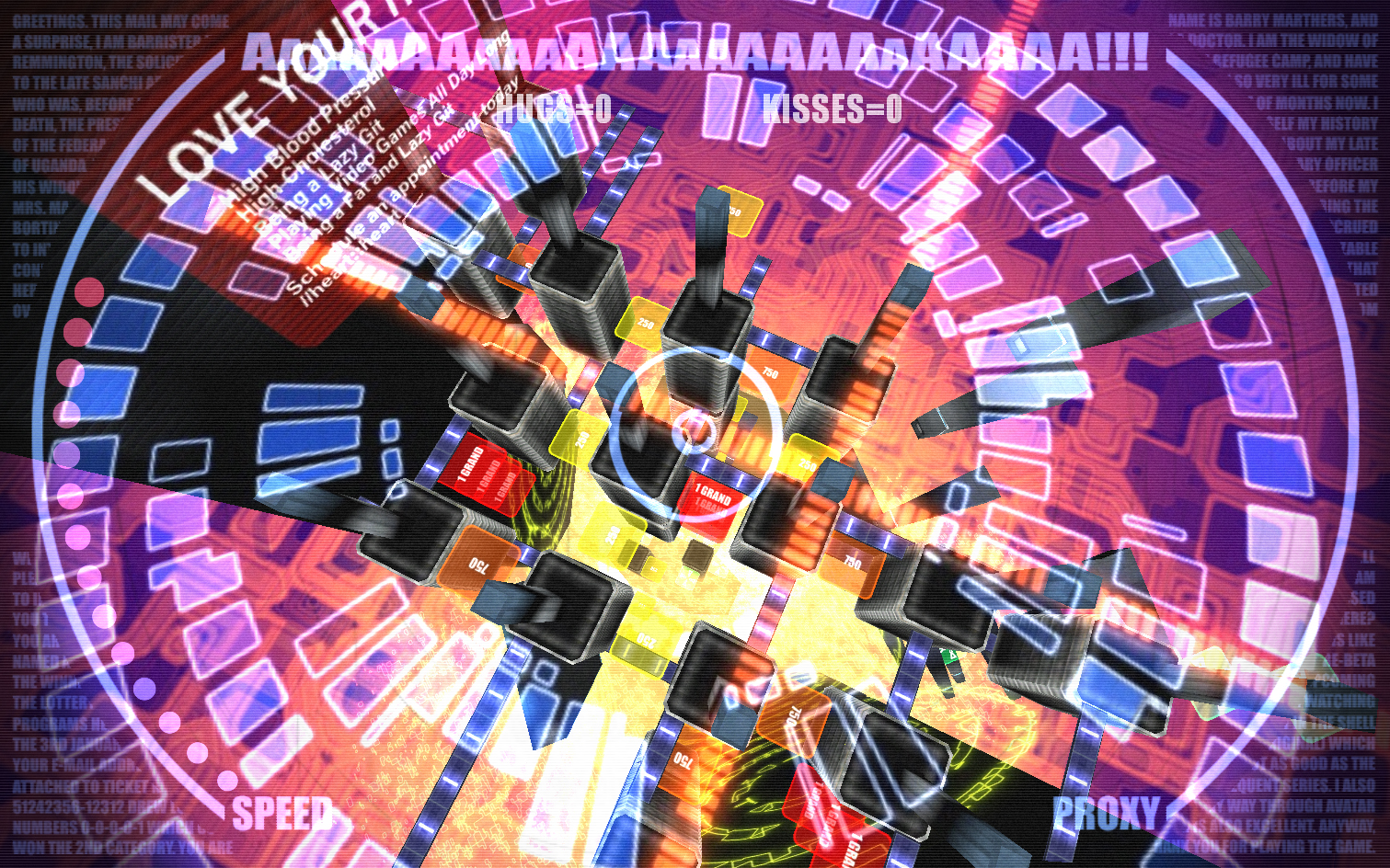
While Showcase winners Waker, Dearth, and AaaaaAAaaaAAAaaAAAAaAAAAA!!!– A Reckless Disregard for Gravity have all been available for some time, Meigakure and Slam Bolt Scrappers are still in production. Meanwhile, Turba was available for only hard-copy purchase during the show, but had its online release on Saturday, April 4th. These games run quite a gamut of genres and styles—Dearth and Waker are incredibly slick student flash games from the MIT Gambit Labs, while Turba, Slam Bolt Scrappers, and Aaaaa! were developed by small production teams. Meigakure, on the other hand, is the result of Marc Ten Bosch’s individual labor. It was also an Excellence in Design finalist at the IGF this year.

The crowds were thick and the lines were long, so we split up to focus on different games and get the closest possible look at each. I focused on Meigakure, Slam Bolt Scrappers, and Waker, while Laura tackled Dearth, Aaaaa!, and Turba. Here’s what we found…

Miegakure, Marc Ten Bosch

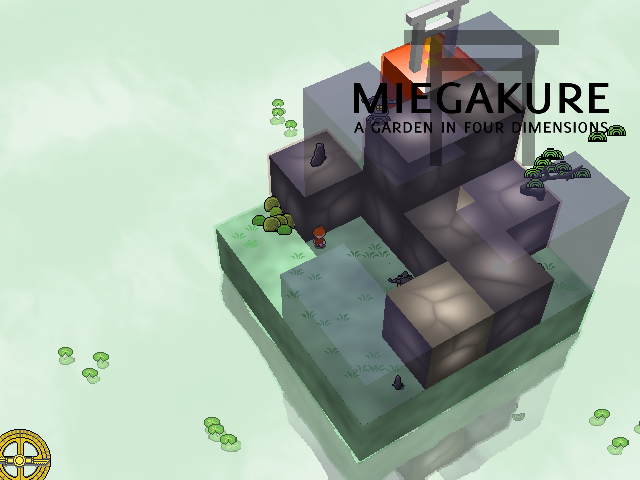
The PAX-East show floor is filled with bodies.  I huddle over an unfamiliar keyboard.  My head hurts, my stomach aches, and I do not know how to get the little man on the screen to the glowing Japanese gate.  I feel stupid and I glance around to see if anyone is watching me, judging me.  I have to fight the urge to stand up and leave—to move on to the next game so that no one discovers my intellectual ineptitude.  And then suddenly I know what to do—my forehead lifts with a flash of insight.  I shift some cubes around, I change dimensions and I’ve solved it!  Three hops and I am Rocky at the top of the stairs, I am Kasparov whispering ‘check mate’ to Deep Junior.  My imaginary onlookers mutter in awe.

If the mark of a good puzzle game is a headache followed by cathartic victory, then this is a damned good puzzle game.

Miegakure is a 4-D puzzle platformer.  Trying to explain the game’s mechanics makes me feel like Flatland’s A. Square struggling to describe the third dimension to the baffled 2-D King.  Suffice it to say, you solve puzzles by moving yourself and other objects through different worlds and spaces where several worlds coexist.  It makes you feel like you’re using a muscle you didn’t know that you had.  You don’t fight against the game so much as you struggle against your own mental limitations.

Mark Ten Bosch says that he’s at least a year from shipping.  I think I’ll preorder.

Slam Bolt Scrappers, Fire Hose Games

Tetris is fun and everything, but I’ve always thought that what it really needs is punching.  Fortunately, Firehose Games shares this line of thought: Slam Bolt Scrappers is a team Tetris brawler.    You play as a burly little guy with a funny hat and giant fists.  He uses these fists to punch miniature chubby Cthulhus with aviator hats, an action that is logically rewarded by the acquisition of colorful tetris blocks.  You then use these blocks to build a fort with shields and weapons—you have to destroy the other team’s structures while protecting your own.

Laura and I are the best people in the world at Slam Bolt Scrappers.  I know this because we beat a team that had one of the game designers on it, who was in no way going easy on us, ok?  The game started off really confusing, but as we figured out what was going on it started to be a lot of fun.  It’s fast paced and frenetic, but that fits with the game’s overall absurdity.  The part of our brain that we use to solve spatial puzzles is very different from the part that we use to punch people who are trying to solve spatial puzzles; frequently switching between these two activities leads to a unique and enjoyable experience.

Slam Bolt Scrappers has a lot of personality, but it unfortunately also has its faults.  For one thing, the four characters look so similar that it’s easy to lose track of which one you’re controlling and which ones you’re supposed to be punching.  The screen is so crammed with color, movement and explosions that your eye never knows what to focus on.  The backgrounds are way too sharp and saturated, so they only add to the clutter.

Still, though. Tetris. With punching.

Waker, MIT Gambit

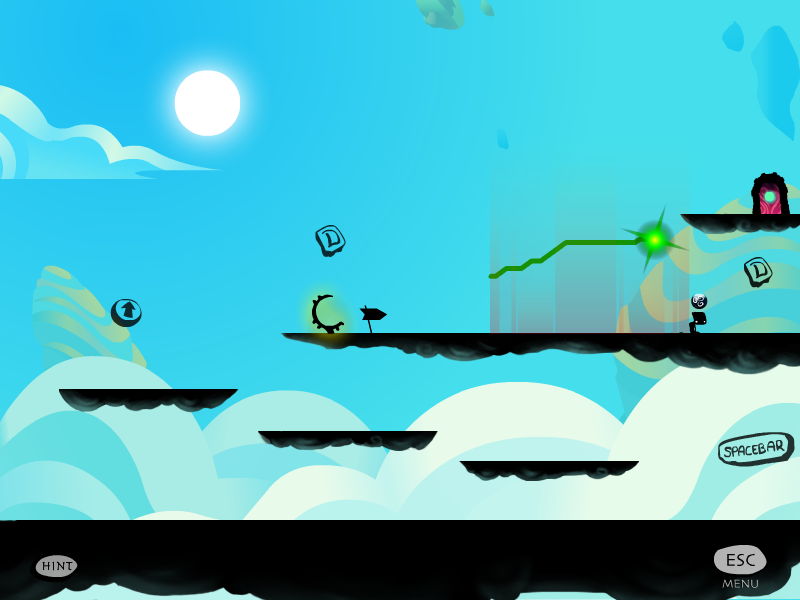
Back in September everyone was talking about an interesting gaming experiment: the MIT GAMBIT lab had created the same game twice—once as a set of abstract actions, and once with a story layered over these actions.  The idea was to see how the presence of narrative affected the player’s experience of the game.

Five months later at PAX East, GAMBIT has removed the story-infused game, Waker, from the context of its abstract companion piece, Woosh.  This lack of context didn’t do Waker any favors, though, because Waker’s story feels like it was pasted over a finished game.

It begins with a long voiceover that tells me I have to save a little girl from being trapped in her dream.   I then proceed to the actual game and it has no relationship to this plot whatsoever.  The platforming is competent and sometimes even clever, but what does hopping around on little platforms have to do with saving a sleeping girl?  Why does it say “Wisp obtained!” whenever I clear a stage?  After each level I’m fed a little piece of voiceover, but I can skip even these by just walking off of the screen.

As an experiment, Waker and Woosh were intriguing.  On its own, though, Waker is just another decent platformer with a poorly implemented story.

Dearth, MIT Gambit

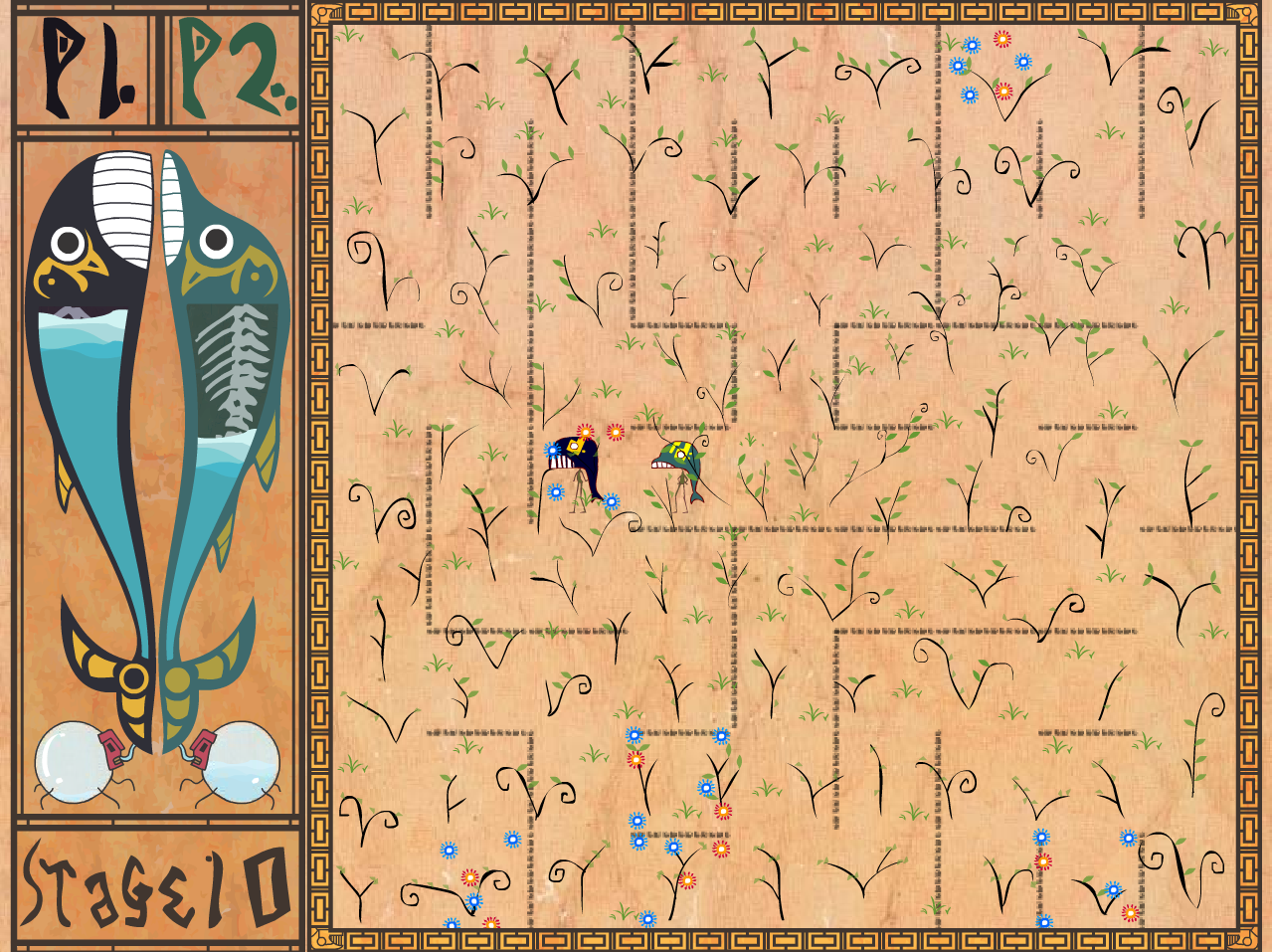
Dearth is unusual. Set in a desert landscape inhabited by tribal beings with fish for heads, its play focuses on enemy creatures which look uncomfortably like hairy water-balloons filled with sweat. They’ll chase you and your AI (or human) partner, and if you stop moving for even a moment with one of these animals on your tail, it will start to kill you. Your job is to keep moving, maneuvering into positions where you can smash your creatures into your partner’s, destroying them. It’s a game about movement, constant movement, but it’s also the kind of enjoyably frustrating puzzle that makes you want to take your hands off the controls and go find some scratch paper. If you do that, however, you’ll die: the game wants you to keep thinking on your feet and compensating for your mistakes on the fly.

In the loud and distracting PAX environment I found it extremely confusing, as did the strangers who played with me. Once I figured out the rules, though, the single-player game became too easy. The two-player game, with its crazily complex maps and the added human variable, is much more interesting. After PAX, I showed this game to some friends in a public space, and as we tried to figure out some of the tougher two-player stages we attracted quite a number of spectators. For a while they crowded around us, calling suggestions over our heads and laughing at our frequent mistakes. When a puzzle game can inspire that kind of moment-by-moment excitement, I’m impressed.

I’d recommend completing the single-player levels quickly, to get an idea of the strategy involved, then quickly finding someone to play with. It’s interesting but unsurprising to me that although Dearth was designed specifically to show off a slick AI implementation, it only really shines when you get another human’s hand on the keyboard with yours, and start solving the puzzles together.

Turba, Binary Takeover

Turba is a rhythm puzzle that uses a grid full of colored blocks. Like many other games based around a block grid, it challenges players to empty the grid by removing groups of like-colored blocks before the screen fills. Unlike other, similar games, it allows players to set the challenge with their own music. The beat of the chosen song controls the rate at which the blocks are added, and clicking with the beat will award more points. A faster song means faster blocks and, thus, higher difficulty.

It’s not a simple clear-contiguous-colors game, though. The one mode I was able to see rewarded the most points only if a player was able to clear groups from each of the four colors simultaneously. Because the player has the ability to swap columns, and because there’s an incentive to hold off cashing in the points until you’ve got a group from all four colors, there’s an interesting risk-reward struggle apparent in each moment of play—should I clear the blocks now, or wait to make a bigger combo? I failed songs several times because the screen filled while I was too busy swapping columns to notice. It’s much faster and more frantic than many other, similar games, and the developers have obviously been thinking about new ways to break puzzle-game tropes and make their game unique.

Perplexingly, the Turba devs were only selling hard copies of their game at PAX. Since then, however, they’ve had their online release, and are now selling downloads from their site, and have made a demo available. They’re also working on moving it to digital distribution hubs like Direct2Drive and Steam.
AaaaaAAaaaAAAaaAAAAaAAAAA!!—A Reckless Disregard for Gravity, Dejobaan Games

This game has been out for quite a while, and anyone interested in indie games has almost certainly heard about it before. Though Dejobaan won’t release sales numbers for it, it’s obviously been incredibly successful: it hit the top five Steam sales during its first week after release.

Kent and I attended a PAX panel titled ‘Indies Will Shoot You in the Knees: Why We Don’t Play Fair’ at which Dejobaan’s winningly enthusiastic Ichiro Lambe asserted, several times, that the game’s success stems from the sheer quantity of personal character that the developers crammed into it. He is absolutely right: as an expression of joyous individuality, it’s a masterpiece. After playing it for the first time, when the alpha came out last year, I felt as though I’d run into an insane genius at a crowded party and enjoyed a fleeting, absurd conversation before losing him in a crowd. Watching Ichiro talk at PAX was a similar experience.

It’s not a game to play alone, really. Play it by yourself, of course, but for every minute you huddle alone with it, promise yourself that you’ll spend another minute showing it to friends, or to your family, or to random strangers on the street. Not only will they think it’s incredible, but they’ll love you to death and assume you’re awesome for liking it. And you will be awesome. The entire game is about celebrating what an awesome, sassy person you are—at any rate, about celebrating the kind of person you become once you start leaping off of floating skyscrapers in a crazy world of neon lights and hilarious graffiti. It’s marvelous.

Garrysmod anthropologically

Our podcast on griefing and countergaming, and the response to the shownotes, got me thinking about in-game communities and how we police them. What’s the best kind of game community—the one where the players make the rules and ‘police’ themselves, or one where empowered community watchmen—GMs, forum moderators, and the like—control, censor, and organize interaction? What are the tradeoffs? Is there really a difference?

Here’s an elaborate case study. Er. Anecdote. It’s not a direct response to anything. It’s just what I’ve been thinking about.

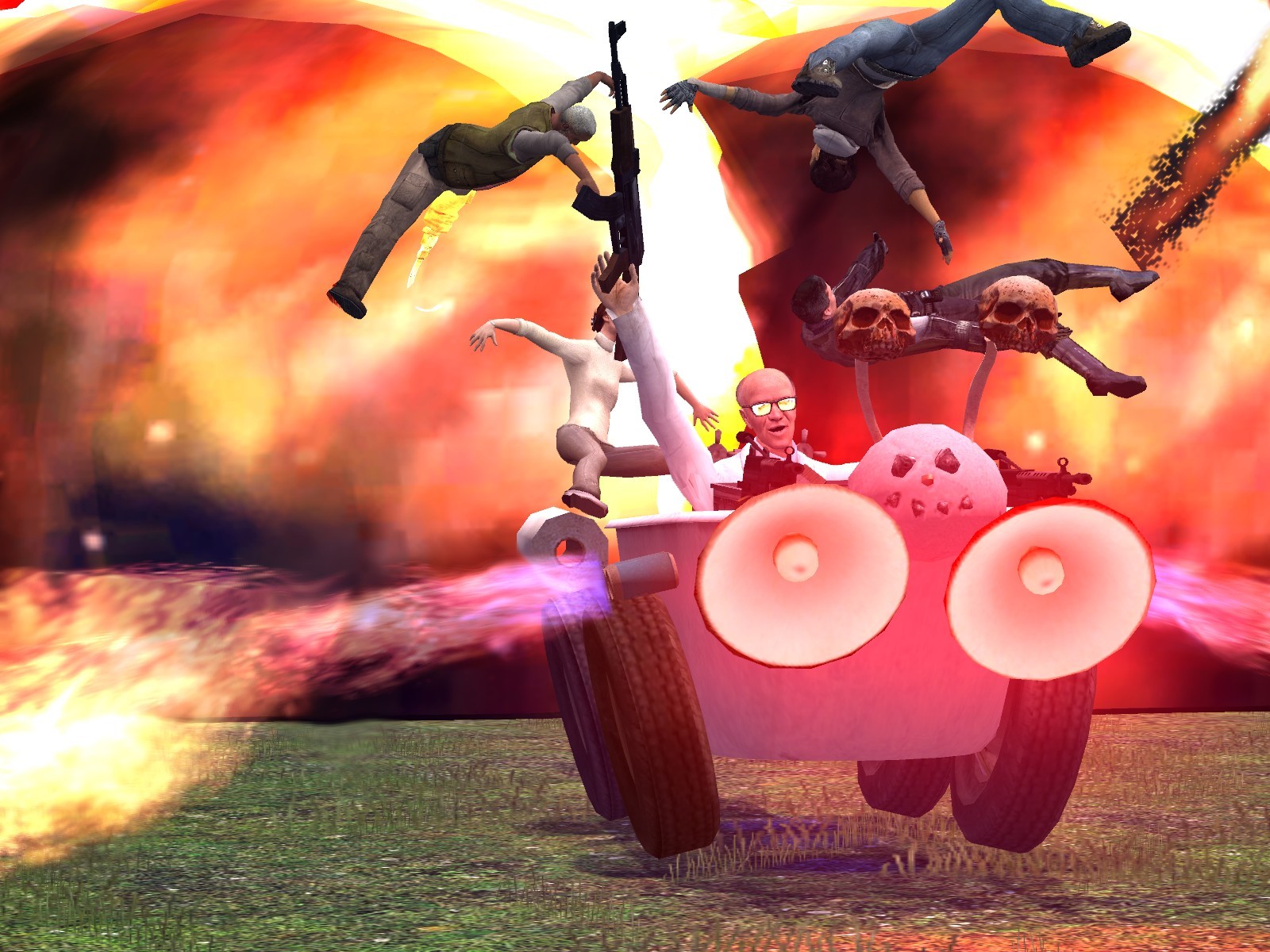
I spoke in the podcast about my crazy experience on a Garrysmod server last spring. While joining a server I hadn’t been on before, I was identified as a newcomer/trespasser, so a moderator seized me, ragdolled my character, and called upon all the ten other players on the server to construct an elaborate machine around my frozen, puppetlike body. They used WireMod to construct a CCTV circuit so I could see what they were doing to me. They welded a bunch of stuff to my arms and legs and exploded it. They did some rather obscene things to my character model. This all went on for maybe 10 or 15 minutes before I was released: I subverted the whole endeavor by calling the server denizens “good sirs” and complimenting their WireMod skills with overly-polite, sarcastic quasi-Victorian-speak. They found it hilarious enough to let me go.

Anthropologically speaking, I’d just experienced a ‘rite of passage.’ Something like a baptism or spirit quest. Psychologically and socially, raping ragdolled server-newcomers with a giant contraption built out of Half Life 2 props fulfills the same purpose as a circumcision ceremony: the victim has to undergo symbolic change in order to transition between two social states. My experience wasn’t official, but it fulfilled the same purpose and transformed me into a community member. When I was between those two social states, I was in a crazy position where I had no social identity at all, and that’s when all the nutcase shit happened. Hazing in sports teams or college fraternities performs the same purpose. To use technical athropology-style terms, I was ‘liminal’ when this stuff happened: I was on a threshold between two ways of being. It was like a spirit quest or some shit, man!

Despite the hilarious extravagance of my spirit-quest hazing ritual, it seemed to me like a more realistic approximation of community dynamics than anything I’d ever seen in multiplayer gaming before. The sheer number of options Garrysmod players have—the number of props, modes, tools, contraptions, mods, and so on—gives them a peculiar freedom unavailable to players in other, more-gamelike environments. In TF2 or Counterstrike, there’s no easy way to stage a transition ceremony: why stop shooting each other in the face? Our real lives are filled with transition ceremonies, so there’s a good reason to keep them out of games. Transition ceremonies aren’t necessarily fun. The’re complicated and cruel and maybe a waste of time. We play games at least partially to escape these kinds of social rules.

But these ceremonies cement communities. Though their participants get to transcend social rules for a short time, these ceremonies make the normal, ordinary, everyday social rules stronger. My hazing reinforced that server moderator’s power and leadership. It also highlighted the players’ sense of community by allowing them to demonstrate that I could only enter it on their terms.

I’m arguing that the lack of gameplay ‘rules’ in Garrysmod made it easier for these players to invent ways to demonstrate their community’s power. The lack of structure also made it easier for the players to construct elaborate community conventions—unwritten rules. Garrysmod is a haphazard collection of strange communities with baroque regulations: on some servers, destroying another player’s constructions gets you punished, while on others, people build only to destroy. Some servers are all about car-racing. Others are for ‘serious builders only,’ and demonstrating noobiness will get you kicked. Other servers are aggressively noobified. Some servers exist purely to stroke their teenage moderators’ egos. Some are elaborate roleplay worlds. Garrysmod throws away the structure inherent in most Source games, then leaves communities with ability to create their own structure. So this is what happens. An endlessly diverging community, a zone where anyone can build their own perfect little world and rule it like an absolute despot. Freer, in its Source-Engine chains, than Second Life.

If you’ll allow me to wax poetic for a moment: the unique lawlessness of this terrain makes it a surprising mirror for the human soul, even more acutely than a standard MMO like WOW or COH. Instead of relying on game mechanics for rules, Garrysmod communities have to create their own, cooperatively or despotically. There aren’t any standards: each server is radically different. Each game mode changes community interactions dramatically. I couldn’t predict anything about each server’s rules of social interaction until I’d figured out what game mode they were running. Even then, I could rarely guess anything until I’d been dunked in headfirst.

So, to return to the top of my post: Garrysmod is an example of a community-policed, low-rule-density environment. WOW is an example of a company-policed, high-rule-density environment. Garrysmod has no standardized ‘gameplay,’ no reward structure, no subscription fee. It’s creative and lawless, and despite its exterior wackiness,  it produces creative and ‘realistic’ social situations, in both good and cruel ways. It mirrors the dark and sweaty interior of our psyches. Where else could I have experienced such a vivid, human form of hazing? Not that the hazing was a positive thing—it wasn’t. It was merely very human.

But you say: high-structure game communities can invent their own ceremonies of transition, too, can’t they?

I’m going to argue that there’s something fundamentally different about that kind of experience: it’s not terribly expressive. Or even interesting! User creativity is at an all-time low there, compared to the effusive nuttiness of Garrysmod. These WOW players are working solely with what they’ve been given because they have no other choice. I think this shackling of creative expression limits the height of community affirmation and the depth of community cruelty possible in standard, company-policed MMOs.

Real-world social ceremonies, cruel or kind, are where we really let our human creativity loose.

It makes sense to me, then, that a creative game would mirror the dark side of social interaction more closely than a stricter, limited game.

I’m sorry this stuff gets thick and academicish. That wasn’t the point of this blog– I wanted to write things about games without getting too deep in the academic shit. I wanted to make the kinds of things we discussed in my games class accessible to those of my gamer friends who weren’t interested in reading big-time games scholars like Espen Aarseth. If gamers are going to be self-aware and not a bunch of mindless dicks, they need the opportunity to talk about this stuff without taking an entire liberal arts degree first. I mean, I love reading some academic writing about games, but I wanted to write the kind of stuff on this blog that’s thoughtful without being overtly academic. I mean, hell, that’s work to me. Right now, that’s grades. I want to write for a living, and I don’t want to write for academic journals. Not right now, anyway. Capisce? Capisce. I’ll try harder in the future.

The Second Person Shooter Podcast // Episode 2: Griefing and Counter-Gaming

2PS Podcast 2

Join us in our second episode as we discuss counter-gaming and spiral into profundity!

Link-Laden Show Notes:

The soundtracks for our power fantasies

Okay, so that Civ 4 menu music is pretty iconic, isn’t it? A quasi-orchestral arrangement of the Swahili version of the Lord’s prayer. Awesome. I have a friend who uses that song to de-stress while writing papers, and recently I bought the song off of iTunes, too. Oh, Baba Yetu: I wish I’d had the sense to buy this earlier. As a kid, see, I listened almost exclusively to game soundtracks—exclusively to bad game soundtracks. I had a Walkman and a stack of blank CD-Rs, but no budget for buying my own music (PC games and Pokemon cards are expensive, man), so when I got sick of listening to my dad’s collection of classical music I would jump on the PC and dig around in Program Files.

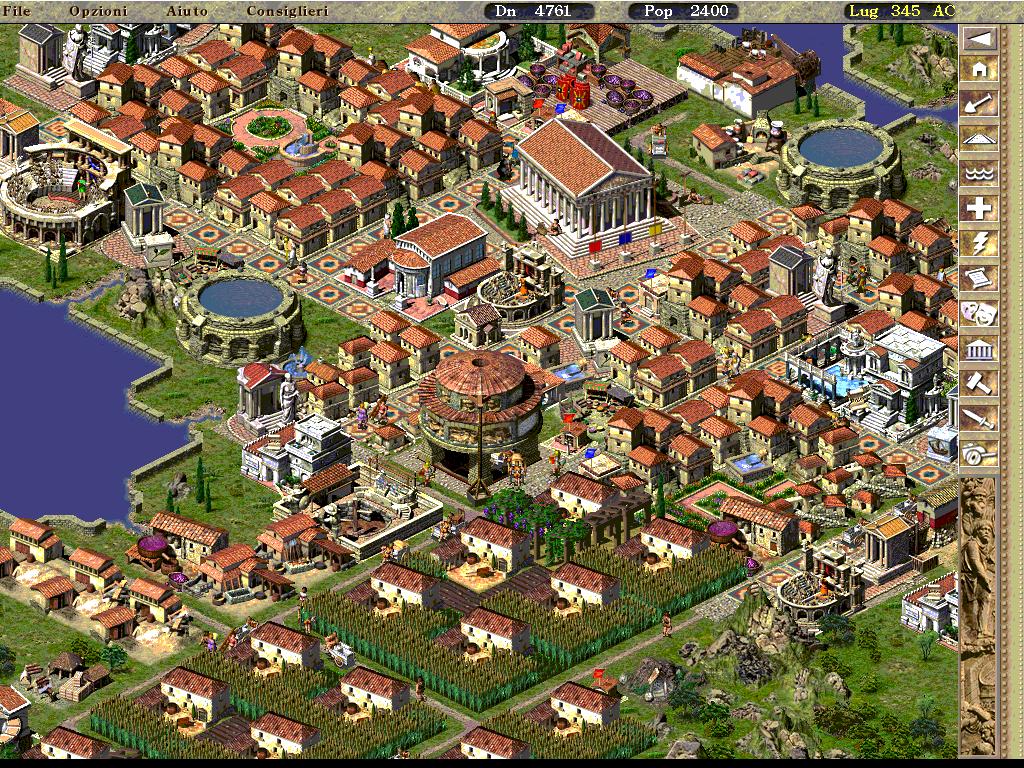
And thus, at the age of ten, I discovered Caesar III’s horrifically brash and overbearing soundtrack.

Listening to Caesar III’s music is like being repeatedly hit over the head with the British Museum. It’s calculated. It’s dry. Designed to be loopable ad-infinitum, the music has few swells or changes in emotion or tone. Just… trumpets. Drums. It sounds like the design team told the composer to “make the game sound like that one scene in Ben Hur,” but forgot to tell him which scene they were talking about, so it just ended up sounding like all of them. There are little marchy-marchy sounds, like jangling chain-mail and clattering army-sandals, built into a couple of the tracks.  They only make it worse.

Listening to the music of Caesar III is like listening to Mussolini or some shit, guys.

But I adored it. I had a brash and overbearing personality when I was ten. I liked listening to movie soundtracks, but I only liked listening to the loud, triumphant bits. As the years went on, my burned CD of Caesar III music became a short-term fix for me in the low periods between Lord of the Rings soundtrack releases.

Because I played Ensemble Studios and Maxis games almost exclusively until middle school, the soundtrack of my early childhood gaming experiences not a very good soundtrack. Looped. Marchy-marchy sounds. Bad MIDI plunkety-plunk stuff. Eventually, it all started sounding as sour to my ears as it must have done to my friends and parents: when the time came for me to graduate to ‘real people music,’ I immediately ran out and purchased Paul Simon’s Graceland from Wal-Mart. Since then, game music has been conspicuously absent from my iPod.

Well. World of Goo got on there—that’s a magnificent soundtrack, that is. And today I spent quite a while listening to fragments of Baba Yetu. But all of those other brazenly triumphant tracks are gone. On top of that, my favorite games are no longer the ones about violence, civilization, barbarism, and control. I don’t even play Civ 4. When I was a kid, I played games partially (mostly?) to enact power fantasies, I suppose. Caesar III and its music were part of that. Now I play mostly indie games, and my favorites are the ones that baffle me, the ones that play tricks on me. When I was ten, the games with the biggest emotional punch for me were the ones where I perpetrated the deaths of millions. Now they’re the ones where I die constantly, or the ones where death isn’t even an option. Those two in particular have some brilliant, moody music. I still like to listen to Lord of the Rings soundtracks, yeah, but now I spend more time listening to jazz, or to the Talking Heads: music that bleeds out from our marginal cultural spaces, I suppose.

Is there something juvenile and coarse about violence? Yes, definitely. Is there something juvenile and coarse about music that celebrates violence? Usually. Are games about violence juvenile and coarse? I’m going to say that they don’t have to be. But am I saying that just because I do admire so many violent games? Am I going to wake up someday and decide that I’m too much of an adult to play Dead Space, or to admire screenshots of MadWorld? I’m already too much of an adult to enjoy Condemned 2: Bloodshot (I mean, it’s terrible), and, like Leigh Alexander recently mentioned, I’ve always been uncomfortable with games that seek to replicate exactly the violence of the real world without really addressing– actually, let’s face it, without criticizing— the morality of that violence.

Power fantasies will always be a part of gaming and, therefore, of game music. I think it’s important that they stay with us, obviously—games are a relatively safe place to have that kind of power fantasy. It’s good for us in the same way it’s good for little kids to play violent make-believe. It’s a kind of exploration. There’s some kind of exploration going on in the Christopher Tin arrangement of Baba Yetu I put at the start of this post– it’s marginal in that it’s the Swahili Lord’s Prayer, but it’s been turned into this kind of crazy grandiose thing, and it’s in a game that’s all about dominance and power fantasies. Something to think about later, I guess. There’s certainly a place for that kind of music: we need power-music to go along with our power-trips.

But this doesn’t mean I’m going to stop hating on the Caesar III soundtrack.