Becoming Art

Monet, Boulevard des Capucines (1873)

In response to the popularization of the daguerreotype in the mid 1800s, Paul Delaroche famously declared: “from today, painting is dead!”  For the past few centuries, paintings had been coming closer and closer to reality, and suddenly here was a new medium—photography—that seemed to render all of those efforts pointless.  Enter Manet and the impressionists, who stopped trying to precisely mimic reality and instead tried to capture the surreal quality of light and the emotion of a landscape.  Of course, painting was far from dead.  Painters just had to discover what set them apart from other art forms, and they had to capitalize on these differences.  The work of Manet, Monet, Van Gogh or Matisse could never have been made with a camera.

Similarly, when photography was invented it struggled to be perceived as art.  Pictorialists like Demachy and Davidson tried to mimic the efforts of the impressionists in their photographs.  They used techniques like gum bichromate to blur the details of a photo to make it look more like a painting.  The Pictorialists were trying to get photography recognized as an art form by showing how it could be like a medium that already attained artistic recognition.

Ansel Adams, Half Dome, Apple Orchard, Yosemite (1933)

Along came Ansel Adams and friends, who founded Group f/64.  In their manifesto, they stated that they were “striving to define photography as an art form…through purely photographic methods.”  They defined pure photography as “possessing no qualities…derivative of any other art form.”  Instead of trying to make paintings with their cameras they explored the unique capacity of photography to create sharp and accurate images.

Still with me?  Here’s the connection to games: Mass Effect 2 is Demachy and Demon’s Souls is Ansel Adams.  We all want games to be perceived as a medium capable of creating art, but we’ve been trying to get there in different ways.

Demon’s Souls approaches narrative in the exact opposite way that Bioware does.  In Mass Effect 2, the story is told through conversations and journal logs.  The voice acting is stellar.  The writing is great.  The camera sweeps in cinematic motion and all of the visuals are coated in film grain.  Mass Effect 2 tries to hoist itself onto the pedestal of another medium (and it isn’t alone).  It is certainly a great experience, and it’s tons of fun to play, but it doesn’t embrace its identity as a game in the way that Demon’s Souls does. Demon’s Souls demonstrates the unique storytelling capacity of games better than any other game I can think of.  It plays to the strengths of its medium; it isn’t trying to be a book and it isn’t trying to be a movie.

In Demon’s Souls you discover each place’s history without any help from a datalog.  There is a constant sense of mystery as you explore the rich corridors and caverns.  You are always pressing further into the fog, unsure of what one-hit-killer is waiting just beyond your range of vision.  Your clanking armor echoes on the cave walls and you are surrounded by groans and heavy breathing.  The space around you is crowded with shuffling life, but you still feel so lonely huddled in the womb-like dark.

Crowded with shuffling life

Demon’s Souls forces you to absorb its environment.  You trudge through the same spaces over and over again and become intimately familiar with each tunnel and vista.  The game doesn’t give you a map, but after playing it I could draw one.   In a game like Oblivion or Assassin’s Creed, space is repetitive and disposable.  In Demon’s Souls no space is wasted.  The world is big and it’s filled with variety.  You will visit every corner of it.

Everyone agrees: Demon’s Souls is difficult.  This is offset by the best melee combat mechanics that I’ve ever experienced.  The blocking and dodging are intuitive.  You can hear the thwack of flesh when you chop into an enemy with a sword.  The controls are so right that mastering them is a wonderful experience.  The precise manipulation of my digital body gives me a very physical sense of the game.  Each on-screen movement is a natural extension of my thought.

After I kill the first boss in the Boletarian Palace, I am once again in human-form, complete with shiny body and robust health bar.  I wander into the wind-whipped Shrine of Storms.  Imagine my chagrin when a dual-katana-wielding skeleton rolls over to me and dispatches me in a single hit.  “Damn you, rolling skeleton!” I shout at the screen.  I come back for more.  He kills me again.  And again.  I slowly learn the pattern of his attacks: roll, roll, slash, pause, roll, slash.  I hold my shield up to him in a challenge.  I sway and I dodge and then—BAM!—I get him from behind.  Several blows later he lies in a pile of bones at my feet.  But the next rolling skeleton has an archer friend who thwarts my masterful tactics by staggering me at just the wrong time, and I’m dead again.  Fast-forward to a few hours later when I’ve been killed a long ways into the level.  I dodge and hack my way through what used to be grueling battles with ease.  It isn’t because I have a bigger health bar or a more powerful sword.  The game has taught me how to fight, and that is why I love it.
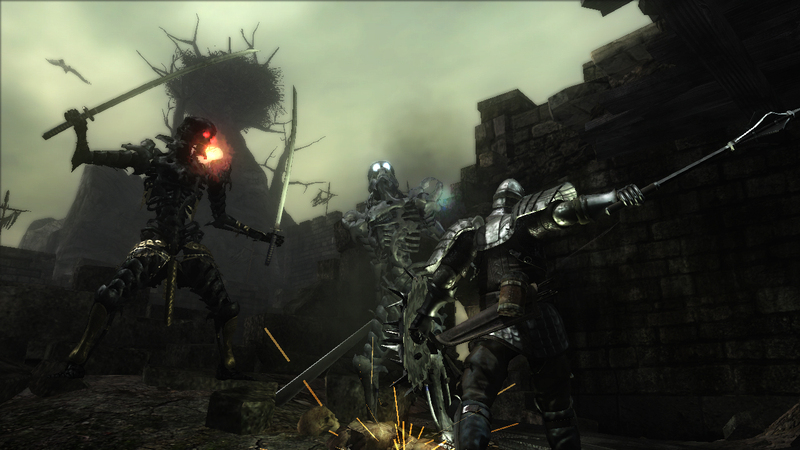
Some rolling skeletons in the Shrine of Storms

In order to be widely recognized as a means for artistic expression, games need to explore the unique qualities of their gaminess, just like Manet did with paint and Adams did with a camera.

Demon’s Souls tells a story through the way that the player inhabits the gamespace.  The combat isn’t just a way of getting you to the next cutscene.  This is what ‘gamic’ means.  You don’t have to learn excruciatingly difficult fighting techniques in order to read a book or watch a movie.  I’m thirty hours in and Demon’s Souls has told me an amazing and visceral story in a way that a movie or book could not have done.  Surely this is art.

—-

This certainly won’t be the last thing I write about Demon’s Souls.  I haven’t even mentioned the unique multiplayer component of the game, and there are so many more stories to tell.  I’m also planning on putting my fancy HD PVR to use and recording some nice videos for you to watch!

In the meantime, why not check out my two favorite articles on Demon’s Souls, by Michael Abbott on GameSetWatch and Tom Bissell on Crispy Gamer.

Guest Article: Your Social Network Sucks

Morgon Kanter writes about an irritating new trend in game design.

The first time I ever played an MMORPG online was in 1996. It was called Medievia, and it was back in the days when “MMOs” were really just called “MUDs”, short for Multi-User Dungeons (anyone remember those?). The first time I ever played a video game online was in 1999. I was 11 years old, and I had just gotten my hands on a shiny new copy of Unreal Tournament. For those of you not old enough to remember, Unreal Tournament was, at that point, considered to be the greatest multiplayer shooter ever made. It even managed to accomplish this when most of the world was still playing it on dial-up.

Unreal Tournament, in all its account-free glory

Medievia was the first and last time I ever felt it necessary to make an account for a game. It was natural, really: it’s a persistent world where you’re expected to log in and continue where you last left off. Medievia was even a little unusual about that when compared to other MUDs, because you didn’t lose your equipment when you logged off. Unreal Tournament did not require me to sign up for account. I don’t even think the developers had conceived of the notion of requiring dial-up users to log in to their weak, easily-DDoSed servers in West Nowhereville before playing the greatest multiplayer game ever made. If one of them did, I have this little fantasy in my head wherein said person walked into CliffyB’s office and brought it up to him: “So, CliffyB, do you think we should make everybody sign up for an account and log in to play multiplayer?” To this, CliffyB would dutifully reply: “That’s the most fucking retarded thing I’ve ever heard.”

Fast forward a bit under a decade, and the most fucking retarded thing that my fantasy CliffyB has ever heard has gained some traction. I don’t really know where this idea started, though I have a few ideas: Xbox Live for the original Xbox, and Steam. On both places it makes sense: the former because you had to pay for it so of course you had to log in to play, and the latter because all the games you bought ended up tied to the account so of course you had to log in to play. But wait! Now the concept has expanded…to individual games? Now I need to log in somewhere to play multiplayer on a PC game, where I don’t have to pay for the privilege? This isn’t like Steam, where you log in when your computer boots up to access your games — all your games. Now I’m expected to launch an individual game, then fill in a username and password in order to get online and shoot people.

UT3, on the other hand, demands you make an account.

My first brush with this terrible idea came, rather ironically, with Unreal Tournament 3, where after booting the game up I was expected to do these foreign actions like “create an account” and “log in” in order to play with other people online. I don’t see why this is necessary — it wasn’t necessary in Unreal Tournament, or Unreal Tournament 2004. (The realistic answer is probably “it’s not necessary, but they want to see and control who is playing their game” or in industry-speak “preventing piracy.”) Part of me is glad that that game did so terribly for that reason; I absolutely cannot stand having to sign up for an account to play a game I already paid for. It’s even worse now that the game is on Steam, where first you download it to your Steam account and then once you launch the game you have to make another separate account. WTF, man? Could you imagine if you had to do that for every game you own? But wait, you say, that’s just for multiplayer. UT3 is a multiplayer game, so making an account is okay, right? What about single player? Funny you should mention that…

Turns out that requiring accounts for single-player games is also gaining traction. Dragon Age: Origins with its “social network” is a well-known example (required for the DLC), and anything made by Ubisoft now gets a special mention for the doubly asinine requirement of remaining online while you are playing even though it’s a single player game! Now, Ubisoft is absolutely terrible, and there is absolutely no redeeming feature in that model. But the thing with Dragon Age: Origins, that doesn’t have to be so bad. But there is just one thing…and it’s the same thing that bugged me so much about UT3. How many people bought Dragon Age over Steam? Given how it was in the best-sellers list for a while, I’m willing to bet the answer to that question is “a lot”. Now, with Steam, I am already signed up for an account. I signed up for this account the first time I bought games with Steam. This account is used for multiplayer in a number of Steam-based games (not just games published by Valve). Does it seem a little annoying to anyone else to have to sign up for *another* account, solely for Dragon Age, just for the DLC? Couldn’t they have just used my damn Steam settings?!

All things considered, Dragon Age is pretty tame. I don’t care about their stupid “social network”, but at least it doesn’t require me to run the Games for Windows Live client to play the game, which some games on Steam do require. That makes even less sense to me — I bought the game on Steam. STEAM. Why do I have to download and run ANOTHER stupid client just to play the fucking game?

Really, Bioware? You want me to blog about my DA experiences on your social network?

This deal with creating new accounts to play games (multiplayer or otherwise) is getting out of hand. I recently bought a pack of indie games on Steam. I generally expect indie games to be free of the nonsense and general stupidity over these meta-gaming issues that plague larger development and publishing houses. Imagine my chagrin when I discovered that I had to sign up for accounts — separately — for two of these games. I see no reason to not name and shame, so let’s do that: Altitude, and Galcon Fusion. Seriously guys, what were you thinking? I have over eighty games in my Steam account. Just think of what that would be like if I had to sign up for a separate account for every one of these. Think about that for a minute, developers. Can you start to see the problem?

I’m not entirely uncharitable here. I can understand why even small game studios would want people to have accounts for stat tracking or other sorts of persistent information (or “fighting piracy”). But making me sign up for another account when I bought your game over Steam is inexcusable. If you want to handle your own accounts, you need to come up with a way to make the Steam account details automatically transfer over. I actually brought this up to the developers of Altitude, to which they replied that they couldn’t because of privacy issues. That’s a good joke, guys. Privacy issues. As if I’m not going to go sign up for an account so I can play the game I just bought. Make it transfer! Bother Valve until they make some API calls to support it, if Steam doesn’t already! It’s not impossible. It’s not even that hard. So do it already. Stop dodging the issue or issuing these weak mea culpas, because I don’t want to have to make and remember separate accounts for all 83 of my Steam games.

Aw man, guys: Laura got published

Wow! I wrote something and the guys at Resolution Magazine, a British-based  game reviews site I read, put it up on their site! It’s an article about how horrible it is to miss out on really important, genre-changing games because we were too busy playing something else that sucked.

Come to think of it, most of the game sites I enjoy, like Rock Paper Shotgun, and Eurogamer, and Resolution, are British. There’s something their journalists have that ours don’t. It’s a candor, or something; an ease with personal expression, with talking about games in an engaging, human way that assumes the audience is also human and intelligent. Hmmm. Something to think about.

CAGE MATCH: PART TWO: Indigo Retrospective*

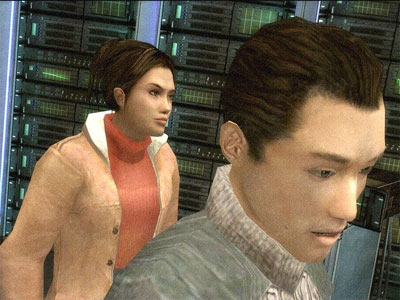
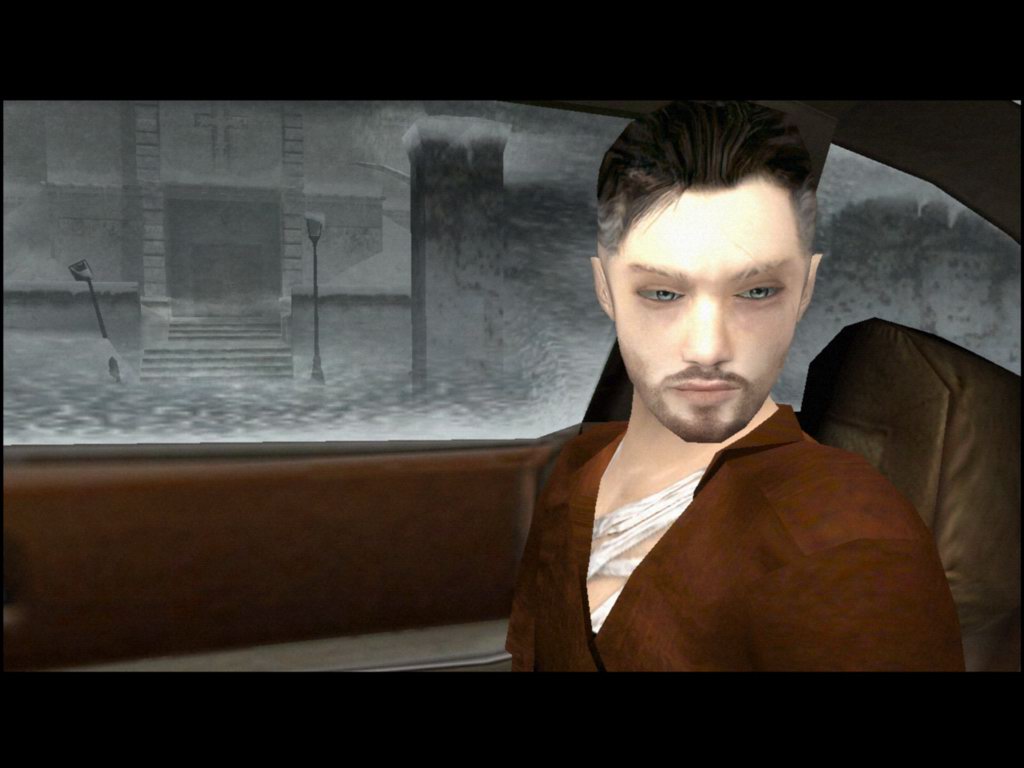
I haven’t played Heavy Rain, as I don’t own a PS3, but I have played the hell out of Indigo Prophecy, David Cage’s prior attempt at the interactive-story genre. When I picked it up, I’d just returned from an exhausting term abroad, and I wanted to sit back and enjoy a reactive game, something without statistics or strategy—basically, anything that wasn’t Dragon Age. So: Indigo Prophecy. I finished it in under two days. Then, like Jane Goodall emerging from the sweaty depths of the forest, I reemerged into society, slightly the worse for wear. Like Jane Goodall, I’d made important discoveries about the animal kingdom. Namely, I had discovered that David Cage is an absurd beast with a humorlessly bad taste in pulp fiction.

This isn’t to say that I didn’t enjoy Indigo Prophecy. I thought it was an absolute riot. But the story was awful, and the controls were absurd, and I never knew exactly what was going on or what I was supposed to be doing, which was also pretty unpleasant. But I enjoyed it the way I enjoy bad community theater: it was comfortable, not too taxing, and charming in an embarassing kind of way. Whenever I see bad community theater, I want to leap up onstage and protect all those terrible little actors from the criticism of the outside world, and I felt the same way about Prophecy. I didn’t want to compliment David Cage myself, but I wanted him to receive comments, abstractly, from somewhere: I wanted him to feel good about himself, even though he’d made a pretty questionable game.

What makes it so terrible? The controls are, in fact, awful. The disconnect between what you are doing with your hands (infamously, of course, playing Simon Says) and what your characters are doing on the screen is occasionally so unreasonable that it bears no excuse. So much has been written about this. I find it unnecessary to add anything.

According to Me, reader of this many books, the plot is also horrifically bad. I can’t justify turning this into an outright spoilerfest, but those who haven’t played it should know that they may understand only around 60% of the plot. It is a mélange of unrelated science fiction and horror tropes, cobbled together in the least convincing way. The final hour of the game consists of a showdown between, basically, two opposing tropes: teams of secret soldiers who represent different science fiction clichés actually fight and kill each other with guns. I found this hilariously symbolic. Furthermore, that final hour develops jarringly: a very filmic ‘cliffhanger’ signals a kind of act-switch, and most of the player choice that took place in the beginning is rendered meaningless afterwards. The tropes move in and take over, the illusion of agency dissolves, and the player is left wondering how the hell the plot got where it seems to have arrived. Game suffers to story here in a big way, yeah, but story suffers too, in that it’s a bad story.

But: independence? Uniqueness? Yes. The game has it.

I played Prophecy off a 10-day Dragon Age high, and I was sick of the kind of choice-making that characterizes DA. The choices in Bioware games are simply too present. Will making this decision cut me off from awesome content? Will I lose a chance at a cool party member? There’s so much content and so much choice in these games that the player can actually reign with a crazy tyranny over the plot, doing whatever he or she pleases to see whatever content he or she wants. Mass Effect, with its stupid achievements for playing through with different party members, actually encourages this kind of illusion-breaking manipulation. Now, I know that you don’t have to play a Bioware game this way, but the temptation for me is overwhelming. I want my party members. I want my absurd dialog options. If they’re there, I’m going to game the system until I get them.

Prophecy eschews this kind of analytical, manipulative play. Stuff happens, fast. You don’t have time to think about it. In order to enjoy this game, you have to give in to the writers and just let their silly story play itself out.  And when you do that, it’s fun! Nonsense occurs, and you react! You punch those fucking buttons! Snap at your boss? Yes, please! Today we’re angry! Comfort your brother? Totally. No time to think. No matter what you impulsively choose to say, characterization stays pretty solid throughout, and even when the player makes discordant decisions—decisions along the lines of the much-maligned Heavy Rain sex scene—those crazy lines are delivered with conviction by the darling cardboard cast. It’s diverting, in the Jane Austen sense of the word. It doesn’t need to be anything more. It’s the weirdest thing ever, and it’s got a confidence and a ballsy drive to be unique that more than makes up for the fact that its foundational element—its story—is a load of steaming bullcrap.

I hope Cage wasn’t too set on changing lives when he made Prophecy. It doesn’t. I think people are nervous about Heavy Rain because Cage wants it to change your life, to change the way you perceive games in general. And it seems to be actually working as a challenge to the industry, a cannon-shot over the bows, so to speak. Prophecy was more like a challenge fired out of a potato-gun. But if Heavy Rain were about nonsense science fiction instead of serial child-killers, if its emotional plot was mostly-shallow twenty-something romance instead of nervous broken-dad misery, people wouldn’t feel so challenged. David Cage figured out that battling giant green Aztec beetles was less than emotionally-compelling, so he refocused: when he says that he’s working along the same tradition as the rest of his previous work, he’s wrong. There’s something pathetic and nonthreatening about Prophecy, but Heavy Rain’s been doing a whole lot of threatening. I’m pretty sure Cage figured out that the best way to hit people emotionally was to drop the canned sci-fi chatter and go for situations that were (marginally) more-relatable.

*AW YEAH. I just typed that.

The Heavy Rain won’t wash your hands for you

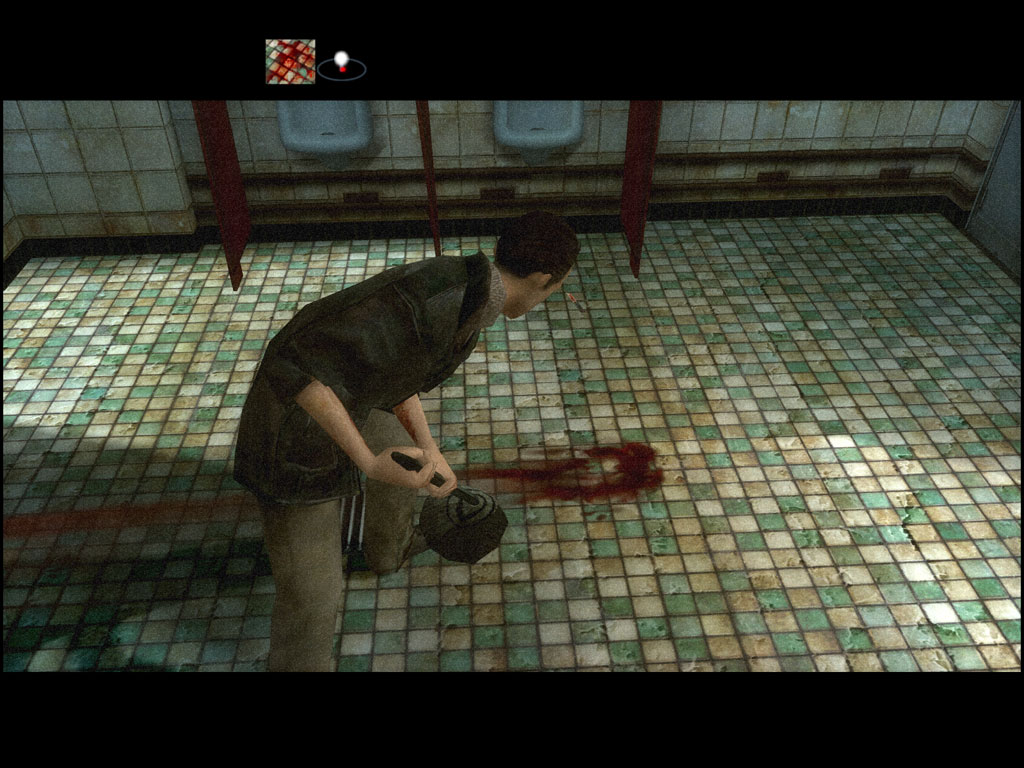
“ETHAN! WASH YOUR GODDAMN HANDS!” Dan and I yell at the T.V. screen while Ethan helplessly stands in front of the sink, staring blankly into space. “Look, dude, you took a leak. Now you wash your hands.” But no, Ethan is not interested in washing his hands.

Maybe half way through the game, Ethan takes another leak and then he walks to the sink. We are excited to discover a helpful interactive arrow! “It’s about time you washed your hands you stupid idiot,” I mutter, pressing forward with my right thumb. Ethan turns the faucet, cups his hands, fills them with water, and then splashes it all over his face. I can almost taste the blood, urine and fluoride.

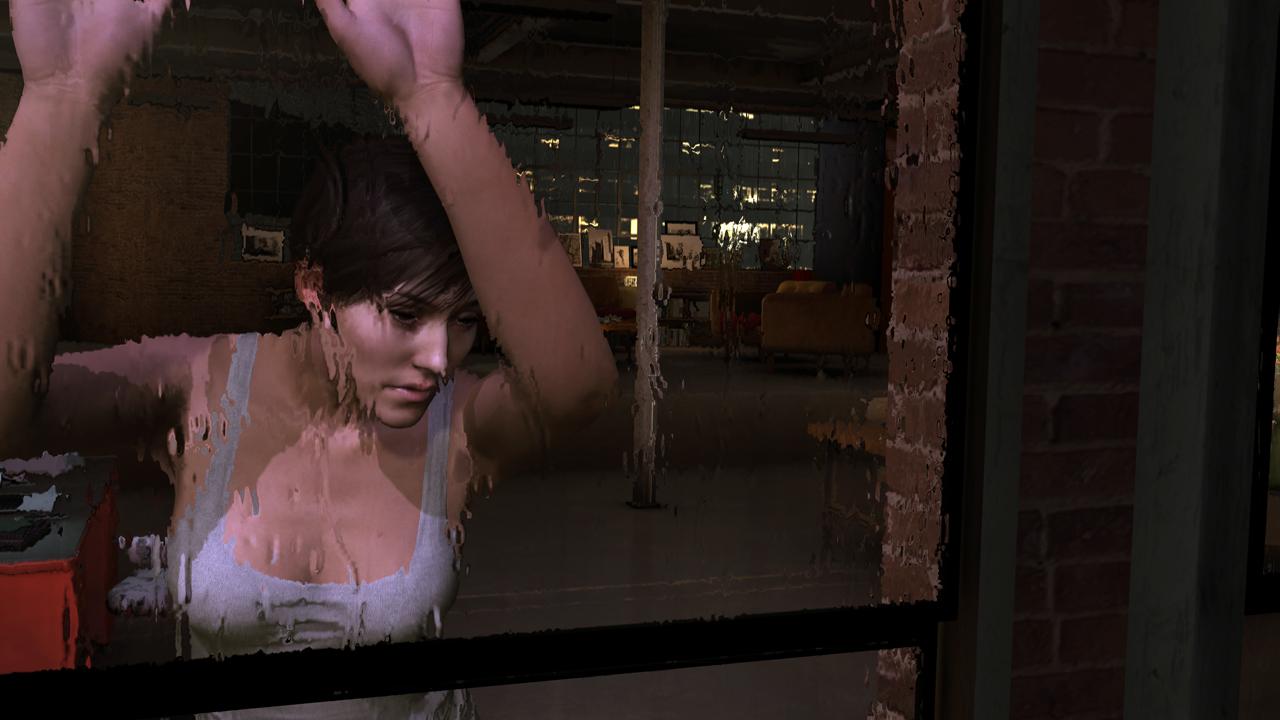
You know how when you watch a thriller movie you sometimes want to yell at the characters for being so stupid? With all of the times they split up and wander into abandoned buildings, you’d think that they’d never watched a movie in their whole pointless, empty lives. Heavy Rain seeks to remedy the problem of viewer disconnect by letting you make the decisions. Sometimes it works, and sometimes it doesn’t. Ethan won’t call the cops like I would, and he won’t wash his hands after he goes to the bathroom.

There are a few times, though, when the decisions are chilling and excellent. I played through the entirety of Heavy Rain with my buddy Dan. Dan doesn’t play games at all, but he sat there watching me participate in ‘interactive drama’ for 10 hours. The controller pulses in my hands as I hover over a table littered with sharp objects, preparing to sever the last digit of my pinky. Dan helpfully suggests, “Whatever you do, just don’t use the saw.”

It’s been said about a million times, but the game is incredibly cinematic. I think that this is why Dan was willing to sit there watching me play it for so long. It sometimes feels like it’s made for viewers as much as it is for players. The interactive elements of the game that are there, however, certainly increased my immersion in the game—navigating an electric maze was intense, and the countless quick time fights always had me gripping a sweaty controller.

It’s probably because Heavy Rain tries so hard to be like a movie that I find myself judging it on so harsh a scale. I found the romance subplot entirely unconvincing, for instance—and not only because of the awkward and unnecessary sex scene. I just didn’t believe that those characters could or would fall in love with so little and trite interaction. There were a few plot holes that bugged me, and one or two lines of dialogue felt pretty stale. By gaming standards, though, the plot, script and characters were great. It might be to the game’s credit that after playing the demo I was ready for an interactive version of The Big Sleep.

David Cage said in a recent interview that he has been writing thrillers because working within such a well established genre was convenient. With Indigo Prophecy and Heavy Rain, he was trying to establish a new language, and in order to do that he needed something that was “easy to write.” Whatever problems that it had, Heavy Rain did establish a new way to tell stories. This is its greatest achievement.

And Cage seems prepared to move on. “I think I’m done with thrillers,” he says, and I for one am intrigued to see what other stories he has to tell. I hope that we will look back in ten years at the new masterpieces that Quantic Dreams and other developers have created and say to ourselves, these could not have existed without Heavy Rain.

This isn’t to say that the formula that Heavy Rain has established won’t change. I expect that motion controllers will make things better. I also expect that quick time events will become one way of doing action sequences, not the only way. There have been very mixed reactions to this game, which has prompted interesting conversations. It’s exciting. Here is where I stand: Heavy Rain has many faults, but it is still a fun and important experience. I would recommend it to anyone. But you might want to bring some hand sanitizer.

Galcon Fusion is good times, some of the time

The gulf between multiplayer and singleplayer Galcon is like the gulf between an adorable puppy and a dead puppy that is already rotting.

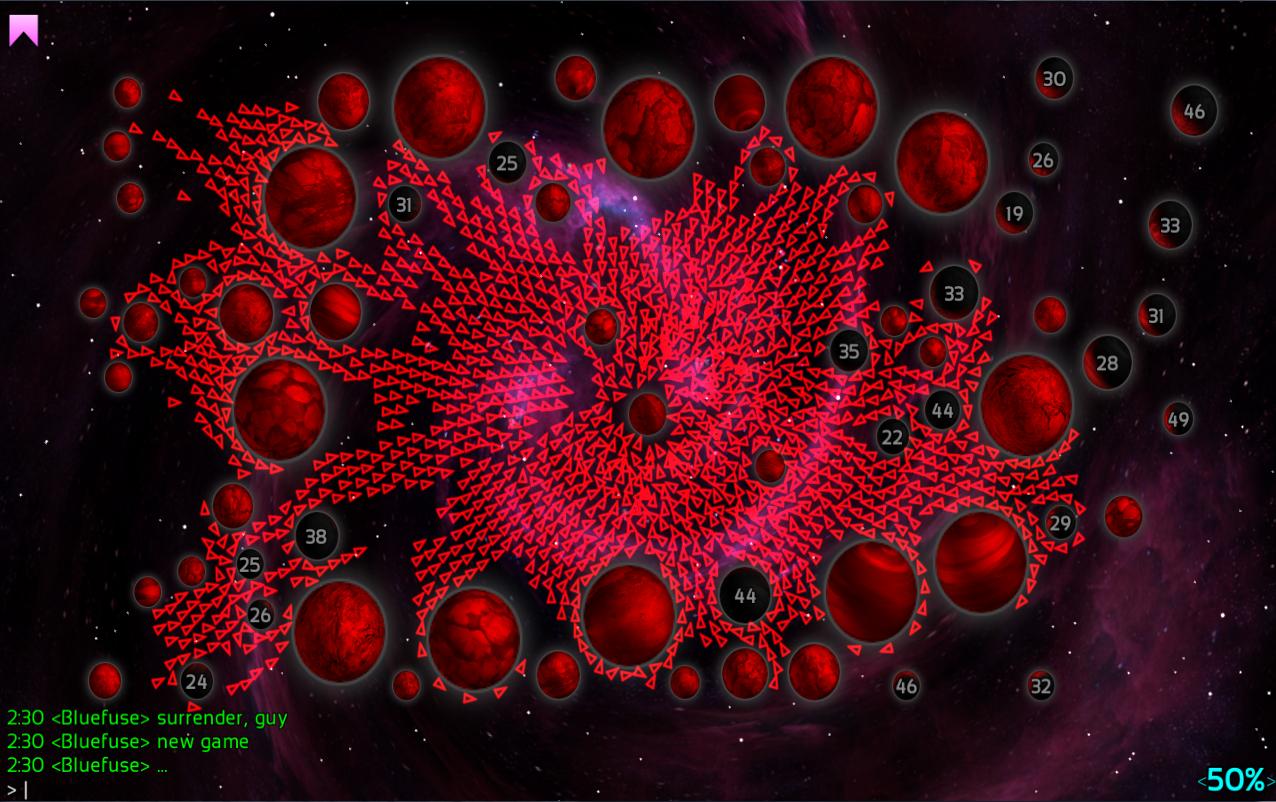
Actually, that’s very unfair. But there is a huge divide. In my opinion, this iPhone-game-turned-PC-clickyfest is practically only worth playing on multiplayer. Multiplayer, particularly the team multiplayer, is a strategy-rich experience; the singleplayer is a dull, brief, staccato process that seems particularly ill-suited to the PC. I’ve heard good things about it on the iPhone, but when you’re playing thirty-second strategy games in your hand, while, as one reviewer put it, brushing your teeth, that’s a very different experience from hunching in front of your computer while the whole screen fills with robot strategy triangles. It’s simply not interesting enough to deserve all that space in front of your face.

Somebody got owned. By triangles.

Because that’s what this game is all about: circles and triangles. Lean, lean visuals. Admirable depth evolving out of a very slight, pared-down set of mechanics. And the developers tried to give this PC version some more totally unneeded complexity by including a seething mess of ill-explained singleplayer game modes that seem to have no reason for existing. And then there’s the AI. It comes in ten levels, some or most of which I could not actually tell apart from one another while playing. So, make of that what you will. This is a game which deserved more than to be weighted down with a million irrelevancies.

This is mainly because the multiplayer is so fantastic. I played multiplayer once last week—during finals week at my college—for over three hours straight. And it did not feel like a waste of time.

See, Galcon multiplayer is is more explicitly a kind of communication than it is in any other strategy game I’ve tried, simply because it’s so stripped down. The units are triangles; they point where they’re going. More triangles means more troops. No triangles means a player’s turtling. Everything that happens is right there on the table, ready for players to draw their own conclusions from. The pull and play of triangles is like a conversation between opponents.

The result is an incredible range of strategy—incredible, really, for a game with only one kind of troop, one kind of command, and automated unit production. By manipulating your troop output, you can trick enemies into thinking you have more or less troops than you actually do; by changing your troops’ direction mid-flight,y ou can pull off some impressive feints. And because your enemies here are people, not AI, the kind of strategy and trickery you can pull off is so much broader, so much more satisfying. There are such a diversity of viable strategies that by the time you’ve grasped the basic mechanics you’ve probably developed a distinctly personal play-style. And these styles stick out. The game is so slight in visuals that player behavior takes the absolute center stage. Other players in your game will know you by your favorite tricks. And you’ll know them by theirs. And team multiplayer is even more glorious—those games are all about wordless cooperation, about games turning on a dime, about perpetrating a fantastic kind of human chaos. It’s something that simply isn’t possible in the singleplayer.

So, the game has terrible music, unimpressive graphics, and a singleplayer mode that struck me as a waste of time. But it has a multiplayer that, out of a few bare-bones elements, inspires a pretty-much endless strategy experience. This is some really tight design. I am incredibly impressed with it. What I’m not impressed with, though, is the fact that the multiplayer servers go absolutely cold during much of the day, which makes it impossible for me to enjoy the one aspect of the game that I actually adore.

Actually, this is what the game looks like most of the time. A bit more placid, I'd say.

I got the game for two bucks as part of an indie bundle; knowing what I know now about the singleplayer and the multiplayer server situation, I’m not sure I would have bought the full ten dollar game just by itself. At any rate, there’s a free demo on Steam. I’d certainly recommend that, but since I bought the game already I don’t even know if that demo has multiplayer in it. I hope it does—this game certainly wants to show potential customers the best it has to offer, not the worst.

Wondered where we were all last week? We were doing finals. It was kind of a bitch. But we’re back now, and you’ll be seeing some interesting stuff soon!

Also, we are going to PAX East. More about that later.

ALSO ALSO, Galcon, regular iPhone Galcon, won the Innovation in Mobile Game Design award at the IGF last year. Here’s the dev’s– Phil Hassey’s–website.

That Badass Portal ARG

So, you’ve probably heard about the glut of crazy Valve news that’s popped up in the past week: Portal 2, Steam for Mac, all that jazz. When the alternatereality game announcing Portal 2 came up, I heard about it within half an hour or so and spent the whole night camping out on the Steam forums, watching people with actual tech skills solve it while I pretended to do homework. Fantastic times. Later, when I had the chance to describe the scope of the ARG to a few of my friends, I found time to reflect on what Valve actually did with that stuff. And it was still pretty astonishing to me, even after seeing it all come out.

Change the ending to a game you released three years ago to build hype on a sequel? If they’d done it badly, people would have been pissed, but since Valve are digital wizards whose fantastic PR and mastery of our fanboy/girl brains amounts to some kind of crazy blood magic, and because they’re effin brilliant, everyone was excited about it. It’s a new kind of game marketing. How often does that happen? Some people in the Valve forums were suggesting that Valve’s hiring of super-skilled MINERVA: Metastasis creator Adam Foster, who used to like to do his releases and updates in the style of ARGs, had something to do with this. Even if they hired him just for his crazy-good map design, they would have been justified; hiring a smart-as-hell mod designer for his self-promotion techniques is a bit more than that. It’s yet another example of how much Valve know what they’re doing.

Apparently some people hate ARGs. But I am not these people, and I have never met any of them. I actually prefer it. Television advertising for games is usually a bit condescending, when you think about it: all that prerendered video, all the absurdly-brief in-game footage, clipped down to just the finishing moves and the glitter, as if they’re trying to hide something. And the enormous quantity of advertising they do on game review sites, which are ostensibly there to provide consumers with unbiased opinions, can actually be unethical.

But stuff like the Portal ARG is special. It treats consumers with a certain amount of praise and consideration that traditional marketing techniques don’t: it’s an intelligence-stimulating, community-flattering kind of thing. If Valve thought we were all dumb as bricks, it would never have decided to do the release as an ARG. If Valve didn’t give a shit about its community, it wouldn’t have done an ARG. The other kinds of hilarious advertising they do, like the TF2 updates, are drenched with an exuberant irony that also grants intelligence to the consumer, but without being exclusive, or telling jokes meant to leave anyone confused. It doesn’t take much brainpower to appreciate the Saxton Hale comic, but it’s dumb in a current, conscious kind of way. AN APE WILL DIE ON EVERY PAGEThere are plenty of cultural references in there, such as the fake comic covers, for anyone who has the context to understand them. It speaks of extraordinary care on Valve’s part. But this is what we’ve come to expect from Valve, so even though we’re excited, surprised, and appreciative, we’re not as surprised as we would have been if, say, Ubisoft pulled this.

But if this kind of thing catches on elsewhere, what could happen? Will it become typical for game studios to produce, say, mid-season DLC designed to link games with their sequels? That would be cool, but it would be coolest if the DLC was free. Will more companies start putting the attention and care into their fanbases that Valve already has? I bet a lot are trying, but they don’t have Steam, so it’s harder for them. Or is this a sign that games as products could become more fluid, that auto-updates to official game plot could become a typical phenomenon? Maybe, but there’s a lot of danger in that: mishandling such a thing could be seen as an invasion of player experience, a breach of trust. Or will this inject more energy into PC gaming as a platform experience—the only platform where games and the internet lie so close together? PC games have always been particularly creative in comparison to console games, and today we’ve got an indie community with a lot of energy and innovation—a community Valve draws from. It would be nice to see more developers get excited about PC gaming again because of that innovation, but we’re always going to have to deal with the hobbling millstone of piracy, too, won’t we?

Ambiguous situations and troubling questions aside, I see the ARG as a good sign for PC gaming. People still care, guys. There are a million bajillion of us out there, and not everybody thinks we’re idiots. It’s awesome.

Machinarium’s Ending Sucks

Endings are hard to do. I have an English professor who asserted once in class that ‘most endings are bad… pretty much, all endings are terrible.’ In a way, he’s right. Story endings are artificial. They’re where we choose to stop telling a tale that, in the context of the real, continuing world, has no actual end. The editorial act of forcing an end to a story’s living world can be an easy thing to mess up: many people would put this kind of blame on Harry Potter.

A puzzle! WoooooThe best ending of any kind that I can think of is possibly the ending to Casablanca, followed quickly after by the ending to Watership Down, which actually made me cry when I was in fourth grade. I can’t think of many games that have a similar sense of profound resolution. Indigo Prophecy’s ending arguably ruined the game for me; the ending to Beyond Good and Evil is a bit too baffling to be fully satisfying. Many people detest BioShock’s ending. The ending to KOTOR II was an uninspired mess. There are games out there with spectacular finales, but I’d argue that they’re the exception to the rule: Modern Warfare is one. Portal is another.* Usually, after the player has spent his or herself on a traumatically difficult boss battle, where can a game go? Can tying up the loose ends of a possibly feather-light plot compete with the excitement of climactic play? Often, no. Games have it tougher than most media when it comes to endings.

Machinarium is one of those games where you can feel the ending coming from far away. It feels very right. The action, which until the final hour or so has been spread all across a small city of robot people, begins to narrow, finally converging on a few puzzle-dense rooms stranded, lonely and hollow, high above the clouds. The music, which is frankly my favorite part of the game, becomes more resonant and contemplative, while the images become more arresting and, frankly, disturbing: the last character you meet is eerie, or at least a bit unsettling, in a way I found very compelling. (Hint: you perform crazy robot psychotherapy on it. Yeah.)

The ending also addresses a common theme that runs through the rest of the game: arcade culture. Throughout Machinarium, the player is exposed to old arcade games presented in non-traditional ways: chiefly, arcade games are presented as relics of the past, as grungy, dust-splattered, rickety, bike-powered objects, entertainments occupying a space as far as possible from the slick, bright, neon experience we normally associate with arcade games. The final encounter, or boss-fight, if you will, is also an arcade game. It’s also non-traditional: its soundtrack is jarring and unpleasant, its display elements are non-rectilinear and bereft of ‘digitalness’, and…

Well. IT HAS THE WORST CONTROLS OF ANY GAME, EVER.

The final ‘boss fight’ of Machinarium is so unpleasant that I put the game down for a whole month. Though the rest of the game is a rather calm, contemplative thing, something that can be solved easily with an old and fuzzy laptop touchpad, the final ‘puzzle’ requires a mouse and infinite patience. You must play an extremely long and badly-designed Flash game for which no rules or objectives are given. Dying pulls you out into the world again, where you must repeat a few trivial adventure-game actions in order to reenter the fight. I died countless times, mainly because my screen was wider than the game file itself (Machinarium is Flash) and every time my cursor left the game panel, I would lose control of the character and die. Furthermore, it’s a mouse-aim game with no separate controls for your avatar: you trail around after the aim cursor, able to control your own position only indirectly. I’m sure that not everyone had as huge of a problem with it as I did; nevertheless, it’s so badly designed that I doubt it would do well as stand-alone gameplay. Which is important in a game that’s partially about games. It’s not the main theme, but it’s prominent, and I expected better.

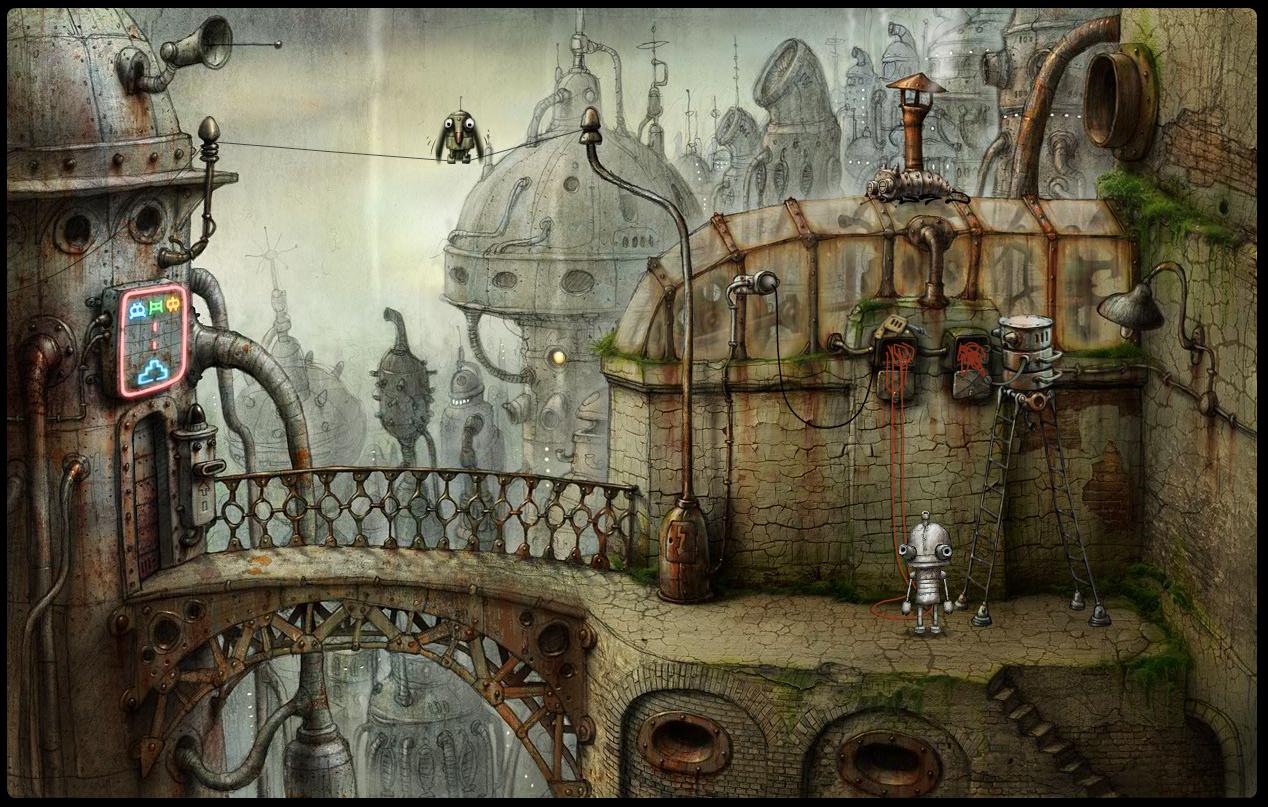
One of my favorite puzzles. It’s got the best background music.

Furthermore, I feel that it pollutes the atmosphere of the entire game: it features your robot taking down enemies with a gun. Up until this point, Machinarium is about a relatively-pacifist underdog robot who is eternally harassed by aggressive, bombastic, armed criminals. I did not expect his final triumph to involve shooting people, even digital people.

Aside from this, I enjoyed Machinarium immensely. It’s a gorgeous adventure game with awesome puzzles—something I hope to write about soon. I’m pretty sure that, art, difficulty, and puzzle-wise, it’s the best adventure game produced by anyone, ever, in several years.

But I haven’t yet played Time Gentlemen, Please, so don’t hold me to that assessment.

* Though the ending has apparently changed due to that awesome ARG— something I need to take a look at!

My Experiences as a Transsexual Lesbian in Albion

I started Fable II as a man, and now I am a woman.  Let me explain.

When you finish the main storyline and buy the castle Fairfax, you are given a short quest to clear your dungeons of bandits.  At the end of the quest you discover a potion that is in a vial shaped suspiciously like a penis.  “This potion will alter the very gender of the man or woman who drinks it,” the potion’s description informs me.  What the hell, I think, why not? I place the phallic glass between my lips and I tip my head back.  A puff of smoke and I emerge a woman.  Obviously the first thing that you do when you get a sex change is to check out the new equipment. I take off all of my clothes.  I’m still muscular and tattooed, but I have a brand new pair of breasts.

Even though I’m a woman, I still look like a man.  I’m taller than everyone on the street.  I’ve got a square jaw and burly arms.  I wonder: what will my wives think?

I have two living wives and one fiancé.  The fiancé was an accident.  She was standing next to my future wife and I proposed to the wrong woman.  As far as I can tell, there is no way to break off the engagement.  She still follows me around sometimes, nagging me about when I’m going to get her a house (you can’t get married without a house).

My first wife died in a bandit raid.  My second wife, Ellen, lives in Bowerstone and we have a little girl named Angela.  When I return home my wife greets me with “Oh, honey!  I’m so glad you’re home!”  My kid runs up to me: “Mommy! Mommy!”   It’s actually pretty eerie.  No one comments on my sex change.  The thing is, my wife is straight.  I wonder if she’ll still sleep with me.  In Fable II you have to flirt with your wife before she’ll sleep with you.  So I whip out her favorite gesture: seduce!  She laughs at me “I’m not that desperate!”  Well how about a smooth pick up line.  “Oh please.  Find someone else!”  Apparently her scripted responses are exactly the same as they would have been if we were just two strangers on the street.

My fiancé has a silver ring above her head. My wife has a gold ring above her head. The four people with hearts over their head are in love with me 'cause of my sexy hat.

My third wife is a zombie.  I brought her back from the dead and then got her to marry me, which was probably the most awesome thing I’ve ever done in Fable II.  Her name is Lady Grey.  Unlike my second wife, Lady Grey is bisexual.  How will this affect her response to my sex change?

Lady Grey and our daughter–my second child, Angela–are both ecstatic to see me.  Again no one seems to notice my new body.  I waste no time in propositioning my wife for sex.  Flex, flirt, seduce.  “You make me feel so…feminine!” says my wife.  HA!  Well, I’m on a roll.  Boom, I pop the question.  You? Me? Upstairs?  “Please,” she responds, “be gentle.”  We hit the sack for some unprotected love-making.  Just like we would have if I had been a man.

I’m glad that Fable II provides room for all sorts of different sexual identities.  It seems strange, however, that there is so little difference between the way that people treat a straight man and the way that people treat a transsexual lesbian.  This is obviously not the case in our society.  Maybe that’s okay, though.  Maybe it’s a good thing that in this fantasy world people aren’t judged by their gender or their sexual preferences.  If Fable II is imagining some ideal alternative to our own world, why shouldn’t it sweep discrimination under the rug?

Still, though, I’m convinced that my wife should have some reaction when I get a sex change.  There has been only one time that any NPC has so much as acknowledged my gender swap.  “Hey, didn’t you used to be a man?” asks a random man on the street.  And that’s it.  Otherwise, the game just treats me like a woman.  Who is somehow married to a straight woman.

Let’s count the gender differences that the game does provide: for one thing, men can’t get pregnant.  When you are a pregnant female character and you are starting to show, the game just fast-forwards nine months and then you can leave your kid with your husband.  You can’t get pregnant unless you’re married, you can’t get pregnant with lesbian sex, and you can’t miscarry.

Men can’t have sex with straight men or gay women and women can’t have sex with straight women or gay men.  Men and women look different.

hmm...

If you’re a man and you put on women’s clothes, your “silliness” will increase.  Putting on a man’s clothes as a woman has no different effect.  In fact, my now female character still runs around in male clothing, since it makes me marginally more attractive than wearing a dress would.  The main way that attractiveness is calculated in Fable II is through the clothes that you wear (weight, strength and hairstyle are minor factors).  Generally, posh and expensive clothing makes you more attractive.  Running around topless makes you less attractive, regardless of how you sexy you think you look with your shirt off.  In order to win over the affections of nearly anyone, all you have to do is put on a fancy coat and stand next to them.  There are literally hundreds of characters in love with me in Fable II.  Running through a populated area inevitably leads to an entourage of babbling admirers.

For both men and women, being muscular makes you more attractive and being fat makes you less attractive.

In our society, the “ideal woman” isn’t muscular—she’s thin and toned.  If you want to make your female character look “pretty” in the conventional western sense of the word, you would need to avoid using physical attacks in the game.  I imagine that Lionhead didn’t want the player to feel like having a female character would limit his or her experience of the game.  Thus, in Albion muscles look good on men and women, and a female body-builder would be twenty points more attractive than the digital equivalent of Penelope Cruz or Scarlett Johansson.

Again, I don’t think that there is necessarily anything wrong with this.  But maybe they could have programmed each NPC to find different things attractive.  Maybe some people don’t like muscular men, some love muscular women, and some people love a shirtless guy.  Maybe some people are turned on by ruffled shirts.  Maybe your spouse gets annoyed if you always wear the same clothing.

The more I think about it, though, the more I feel like the big problem here isn’t with Fable.  It’s with games in general.  We just aren’t at a place where we can create anything similar to the feelings that a real relationship would produce.  My wife’s stilted reaction to my sex change is bothersome, but would it really be that much better if she got upset and divorced me?  The game doesn’t attempt to convey the social repercussions of getting a sex change—but does it effectively convey the experience of any relationship?  Not really.  Maybe the real question here is why I’m looking for something like a real relationship in a video game at all.  I guess that I want to play a video game that can make me as attached to an NPC as I was to Aragorn or President Bartlett.  It hasn’t happened yet.

“Why does our society reinforce gender stereotypes?” My daughter randomly asks me.  Is she saying this because she has two mothers?  Would she have said this if I was still a man?  I have no idea.  “Never mind,” she continues, “I’ll just go and play with my dolls.”

This is why I still like Fable II despite its many flaws.  The game doesn’t take itself seriously, so why should we?  It makes me laugh.  It makes me think.  Maybe that’s enough.  You get a pass this time, Molyneux.  But I’m still pissed about the race thing.

Sleep is Death

I preordered Sleep is Death today. Which is interesting, considering I was not an enormous fan of Passage.

I hated Passage for a pretty specific, personal reason. There was actually a lot about it I did enjoy: I liked the minimalist style, and I appreciated the player’s bleak lack of control over life and death. As a game where action equals metaphor, it works perfectly. But I had a problem with the meaning of the metaphor.

There’s a brief line in this article about every day the same dream that captures my feelings about Passage: Passage is trite, simplistic, and false. It’s too-perfect love. If that’s how Jason Rohrer thinks he’s living his life, hand in hand down a long hallway of colors, together all the time, great for him. That isn’t how most people live.

His assumption that this is life is what comes across as pretentiousness: anyone who doesn’t agree with the premise of the metaphor is going to perceive him as making art out of falsehood. During the time when I first played Passage, I was pretty lonely and was generally mildly upset with the universe; the game made me want to hunt Rohrer down and kick him in the face for being so blandly happy.Yeah, my reactions to everything he makes are totally personal and subjective– but I’d like to think that’s how he wants people to react to his games. On a personal level. On that personal level, I just wanted to kick him in the face for being happy in his stupid hallway, and for assuming that his own minor navigational problems, so to speak, were profound.

But Sleep is Death doesn’t look like anything trite at all. Where Passage was about what I see as a kind of fake idealism, Sleep is Death is going to be about actual interaction, about the problematic, fast-paced negotiation of a shared gamespace. The slideshow trailer he put up shows the kind of ambiguous, troublesome play that I appreciate in my game-metaphors about life.

Also: Storybook Weaver crossed with being a Dungeon Master. BEST. GAME. CONCEPT. EVER. I grew up on Storybook Weaver!

Good job, Mr. Rohrer: here are my dollars. I promise I won’t try to write class papers about how much I hate you anymore (something I actually tried to do last summer). I have formally erased you from my official List of Dicks. Be free, Mr. Rohrer. Show the world you know what the hell you’re doing. Again.